The world ain't what it used to be, and it won't be again. Thirty years of ash and wind have scoured the bones of the earth down to gray. Gray dirt, gray sky, gray on the backs of my hands when I rub the grit off them. Out in the badlands you don't hear laughter. You hear wind in dead metal, hinges working themselves loose over years nobody bothers to count. I laugh anyhow. The other choice is weeping, and there is no water out here to spare on it.
We've been scraping by in this old depot since the first hard frost. Steel walls, most of them still standing, hold off the worst of the weather. Gregor says it stored grain before the bombs came down, back when there was grain and a government that cared where it went. Nothing much to store now but us. Rusted tools on the shelves. Crates we pried apart and nailed back into beds. A greenhouse that's more tape than glass, and inside it Isolde coaxing green out of soil that ought to be as dead as everything else.
She grew a tomato last week. Size of a fist, red going to black at the crown, the first thing with color in it I'd seen in a season. She held it in both hands and her eyes filled and did not spill. Isolde does not spill, not where the girl can see. Zariel bit it and chewed slow and told us it tasted like sunshine. Eight years old, and she knows what sunshine tastes like, which is more than I can say. I gave the child my half and told her my teeth were too old for sweet things. A lie. I'd have chewed broken glass to keep that look on her face one minute more. There was a time I had my own to lie to, a girl with her mother's chin, and I learned the trick of lying for love at that first small grave and I have never set it down since.
"Joey, you're wasting away," Isolde says. Hands on her hips. She stands at me like a mother, though she's got maybe three years on me and a harder mouth than any mother I ever crossed.
I grin through a week of stubble.
"Ain't much left to waste, darlin'. Bones and bad jokes. The jokes keep better than the meat."
Mavrek snorts from his perch at the high window, rifle across his knees, one boot heel tapping a rhythm only he can hear. The boy's got a laugh down in the gravel of his chest, rough and honest, one of the few honest sounds left inside these walls.
"You're more joke than man, Jesup."
"Careful, son. You'll bruise what's left of my pride, and I keep it where I keep my good knee."
We laugh together, and every one of us hears how little is left in it. Nobody says the rest aloud, not with the child in the room sorting her buttons into colors she's named herself. The red ones are tomatoes. The white ones are teeth. Food's low. Water's lower. The cold out there kills slow and the thirst kills slower, and that is the small trouble. The large trouble is people.
Speak of the thing and it limps through the door. Gregor, down off the roof, his face set in that cracked-stone look he wears when the news is bad and he's deciding how to soften it, and then deciding the softening is a lie he hasn't the time for.
"UTF dropped a pod," he says. Voice low in his chest. "Two clicks east. Watched the chute come down over the ridge, white as a wedding."
The room stills. Even Zariel goes quiet over her buttons. A supply pod is a gift and a hook with the gift hung on it, and somebody always pays for what falls out of the sky. Last pod, we lost two. A young couple, not six months married, filling their arms with cans while a scavenger crew put three rounds through them from a rooftop a hundred meters out. We left them in the lot where they dropped. Stopping long enough to bury a man is how you end up in the dirt beside him.
"Two clicks," I say, and I have decided it before the rest of me has caught up. "There and back before the light fails."
"And straight down the throat of whoever's sitting on it already." Gregor's jaw works side to side, grinding on a thought. "You know there's a trap. There's always a trap."
I shrug. "Everything's a trap, old man. The only question worth the breath is whether we spring it on a full belly or an empty one. I'd rather die with something in me besides regret."
Isolde's fists close at her sides, knuckles rising pale. "We've got Zariel to think on."
"I am thinking on her." Soft now, and I mean the soft. "And on you, and the boy, and your mean old carcass, Gregor. That pod has food in it. Water, maybe. Meds for certain, and the girl's been coughing in the night, and I have been lying here listening to it and pretending I can't hear. We don't get to be proud about which direction our mercy falls from."
Mavrek is already standing, rifle coming up onto his shoulder, the boredom gone out of his heel. "I'm with Joey. We don't take the risk, we die slower instead of faster, and slower's the worse way. I've watched both."
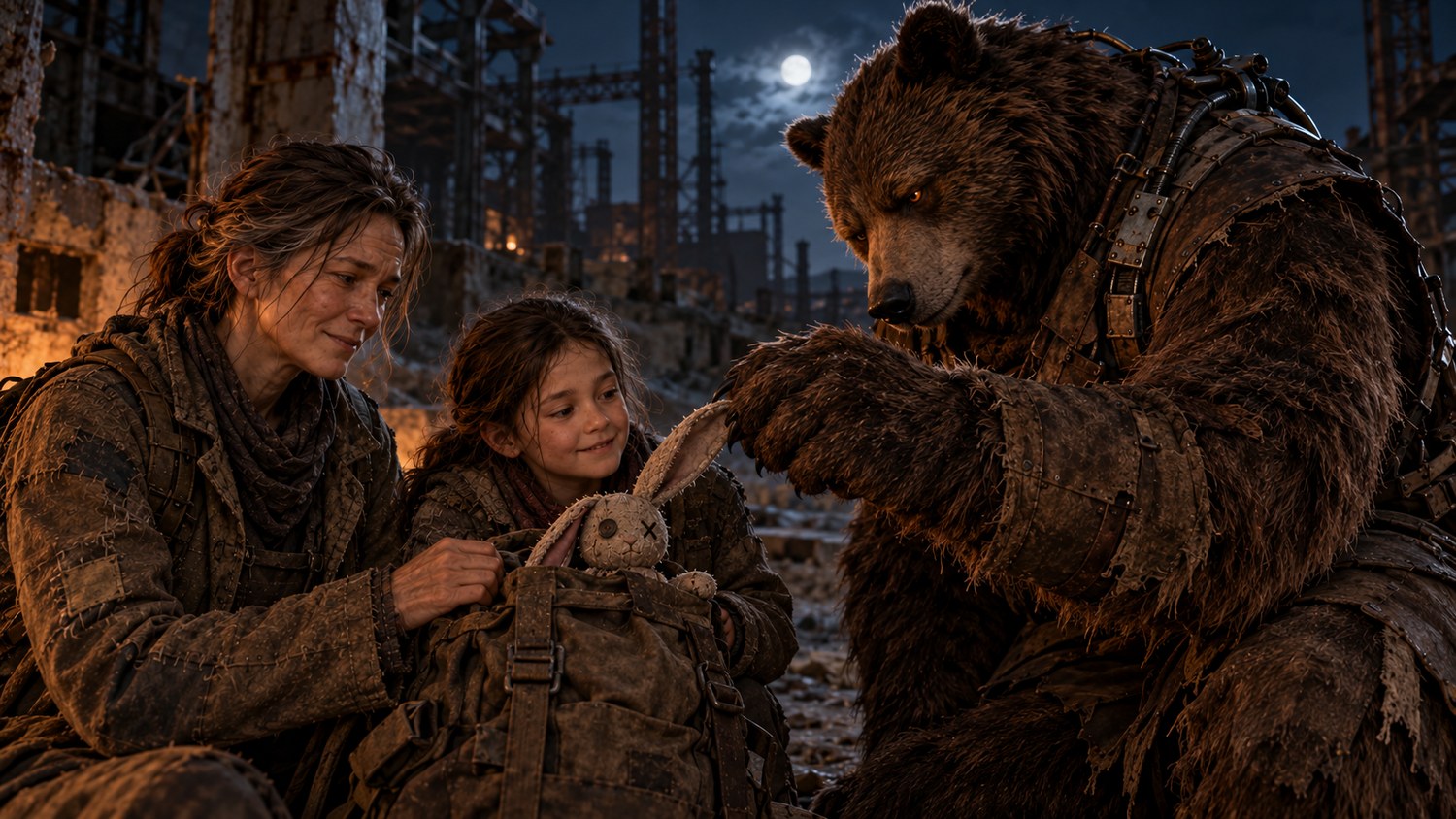
Gregor mutters something into his collar that the Almighty might have caught and I didn't, and he does not argue. Isolde looks a long moment at Zariel, who has stopped sorting and sits with a stuffed rabbit held up under her chin, the thing more patch than plush, one button eye long since lost and sewn over with a small black X in thread Isolde unpicked from her own sleeve. Isolde breathes out through her nose, the breath of a woman losing an argument to the people she loves, and reaches for her pack.
"Fine. But if this is the day my girl dies, Joseph Jesup, I will not forgive you. Not in this life, nor in whatever cold thing comes after it."
"Wouldn't ask you to," I say, and take up my knife and my old rifle, and the weight of the rifle is the one plain comfort I own that has never once failed me when it mattered. "Light's burning. So are we. Move."
We go east under a sun hung low and swollen, the color of a wound that will not close. Underfoot the ground breaks in a crust of dried mud and old glass, and every breath drags rust to the back of my throat and leaves it there. I take point. Nothing moves on the flats but the black fingers of dead trees and the slow slump of buildings that stopped being buildings a long stretch of years ago.
"You see anything?" Mavrek keeps it to a murmur.
"Not yet," I murmur back. "They're out there."
They are always out there. A trader came through a month past and talked more than was wise for a man carrying everything he owned, and somewhere in the flood of him came the Bloodtithe. They burn the impure, he said, leaning close, breath like spoiled fruit. Burn them living, and then eat what the fire leaves, so the sin passes into the faithful and out the far side and the sinner comes clean, scrubbed by a stranger's teeth. I didn't ask him to make it sit right in my head. It doesn't. Men get hungry enough and they will put a robe on the hunger and a prayer over it and call the eating holy.
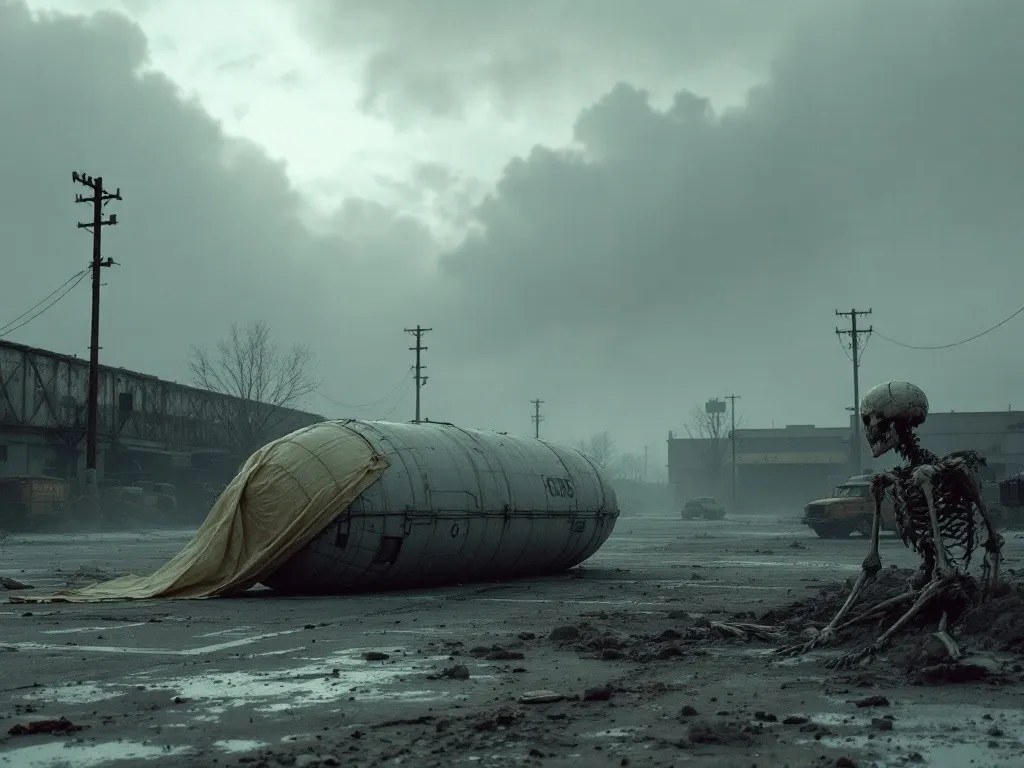
We top a rise and there it sits. The pod. A long dark spike of alien metal driven into the broken field of what used to be a parking lot, its chute stirring weak in the breeze, snagged on a light pole bent near to the ground. I glass the ruins through a single cracked lens that splits everything in two. No movement. That buys us nothing. I cannot see well enough from here to trust it either way.
"Looks clear," I say. "Which is the moment you stay sharp."
We come down slow, weapons up, boots finding the quiet places between the glass. Gregor works a crowbar into the seam and the pod coughs open and the smell that rolls out of it stops my heart in the good way, the smell of a kitchen, of a morning, of before. Cans with the labels still bright. Sealed water, four liters, more water than we have seen in one place since autumn. A medkit with the UTF cross unscratched on the lid. We fall on it, hands moving faster than sense, and my own blood is loud enough in my ears that I nearly miss the sound that matters.
Boots. Gravel. The particular grind of men who have stopped trying to be quiet because they have decided they don't need to be.
"Company," I breathe, and turn.
They come up out of the ruins slow, one and then another, until there are seven of them standing in the failing light. Soot-black rags hung with bone charms strung on sinew, and the charms click against each other as they walk, a sound like a wind chime made by somebody who hated wind. Their masks are stitched leather drawn too tight over the face, greased and ashed to a dull shine, and behind the eyeholes a wet shine catches the low sun. One hauls a spear tipped with a shard of road sign. One drags a chain weighted with meat hooks that scrape the ground and leave a wandering line behind him. The one in front carries a butcher's cleaver long as my forearm, the steel gone to brown rust and old brown stains that are not rust, and his mask is painted with a skull, crude and plain, in case anyone doubted what he was.
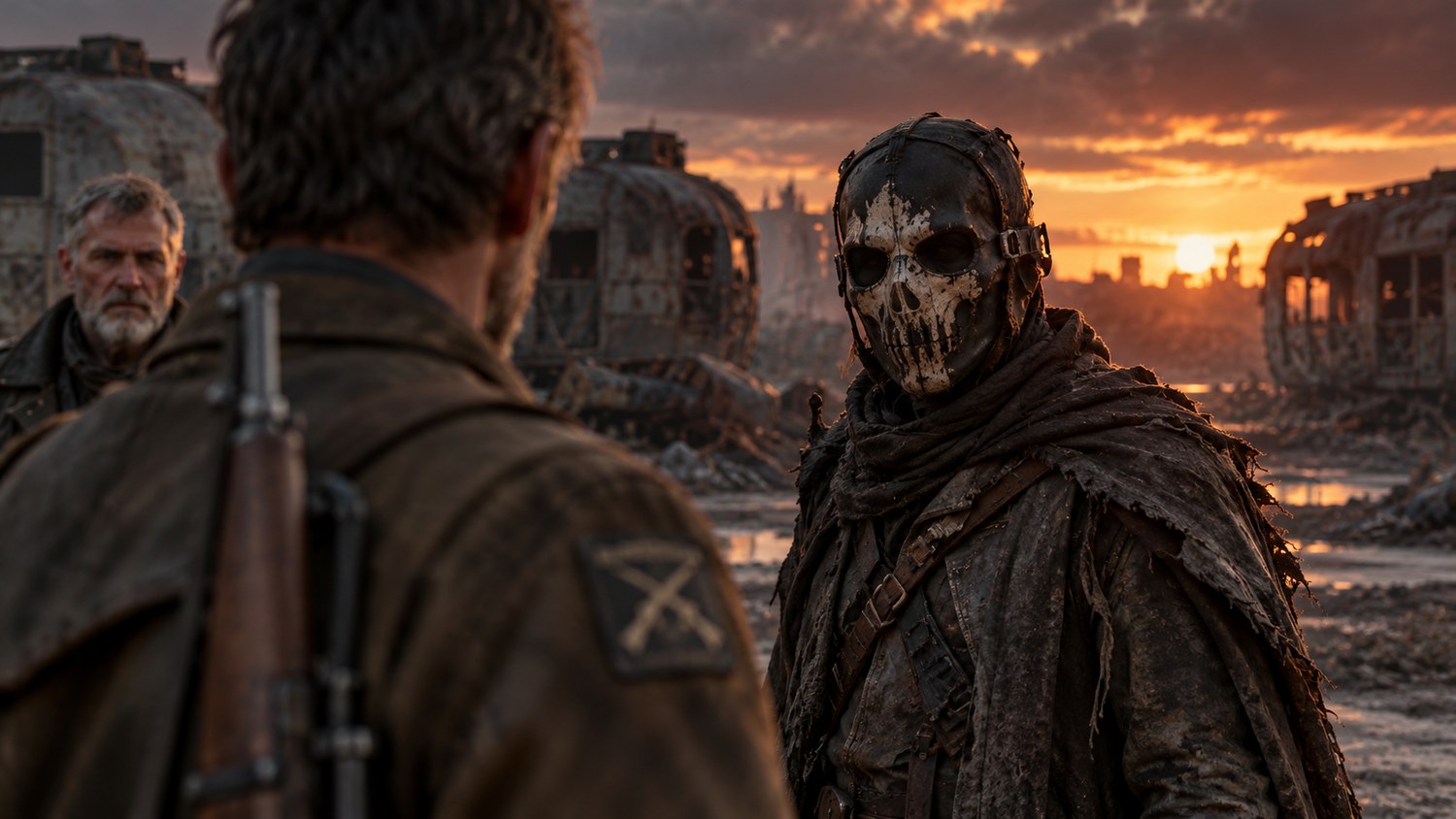
He tips his head and looks us over slow, a butcher sizing a hanging carcass, deciding where the good cuts are under the lean.
"You have come to feed the fire." His voice is a rasp file drawn across wet bone. "To sit at the Feast of the Pure and be made clean." Then, half-turning to the masked ones at his back, flat, a foreman setting the day's work, "Guns first. The small one we keep. We do not burn the small ones."
So there is a rule in it after all, an order running under the appetite, and that is a colder thing than the mad hunger I had fit them into on the walk out. I set my front sight on the center of his chest. My hands are steady. They learned to be steady in a war that had a name. The war is gone now, and the name with it, and most of the men, and the steadiness stayed behind in my hands.
"You can chew on this instead."
The shot cracks the flat wide open. He jerks, and below his collarbone a flower of red opens and spreads down the rags, and he does not fall. He laughs. Wet, deep, a sound with standing water in it, and he takes one staggering step toward me with his own blood running warm off his fingertips, and the six behind him break into a run, and the evening comes apart.
Guns are worth more than gold out here. Gold won't kill a man for you. They want ours as bad as they want our meat, maybe worse.
The first comes at me with a machete and his boots throw dust with every strike against the old asphalt, and he is screaming something about fire, about cleansing, about my soul. I hold. I hold past the point where holding feels like dying on purpose, and then I slide off the line of the blade and it passes a hand's breadth from my cheek and I feel the wind of it, and I drive the butt of the rifle into the hinge of his jaw and feel the hinge give. He drops boneless. I am already turning, already firing, and the next one takes the round through the painted leather and folds down wrong with one leg beneath him and does not try to rise.
To my left Mavrek's rifle barks twice. A Bloodtithe takes it through the leg and keeps coming on his belly, dragging himself across the broken ground with a knife in his fist and no sound in his throat but breathing, and his eyes above the mask are calm, and the calm is the worst of it. Mavrek doesn't wait for the crawl to end. He crosses to the man and brings his heel down on the back of his skull, and the second time he does it the fight goes out of the body beneath him, and the boy's face when he looks up is a boy's face wearing something far too old.
Gregor is in it with the crowbar, and for all the blood he has already given to the day he swings it like the war never ended in him. He turns a spear thrust on the shaft of the bar, catches the haft, hauls the man in close enough to kiss, and brings the hooked end down on a knee. The joint comes apart with a sound. The Bloodtithe folds around the ruin of his leg, howling, and Gregor takes the dropped spear and sets the point under the man's chin and leans his whole failing weight on it and holds it there until the howling stops.
The leader is still on his feet. He is slow. He is deliberate, every step laid down with intent behind it, his breath whistling through the mouth-hole of the skull mask, the red still spreading down him and he walking it toward me like a man who has all the evening in the world.
"Impurity must be bled before it can be burned," he says, and lifts the cleaver high.
"You're bleeding fine without my help," I tell him, and work the bolt.
Then the chain takes me. It comes in from the blind side where my eyes weren't, and a hook catches the meat of my forearm and bites through the sleeve and into the muscle, and the pain whites the edges off the world and narrows it to one screaming point. The man on the far end of the chain grins behind his mask, teeth and shadow, and hauls, trying to drag me off my feet and into the reach of the others.
So I give him my feet.
I let the pull take me, and I go in fast instead of fighting back, straight down the length of the chain and into him before he can understand his own luck, close enough to smell the grease and the rot on the leather, and my knife goes into the soft of him under the ribs and I turn it in the wound where the turning counts. His breath comes out warm against my neck, almost tender, the last warm thing he has to give anyone. I pull the blade free and the second cut is kinder than he would have been and he goes down and takes his chain with him.
"Joey!"
I turn into the cleaver coming down.
I throw myself off its line and the blade splits the asphalt where I stood and the sound of it rings once like a struck bell. He is fast for the size of him, closing before I have my feet back under me, and the cleaver comes across in a flat arc and I get the rifle up crosswise and the barrel takes the blow and the shock of it runs up through my wrists to my shoulders and nearly tears the gun out of my grip.
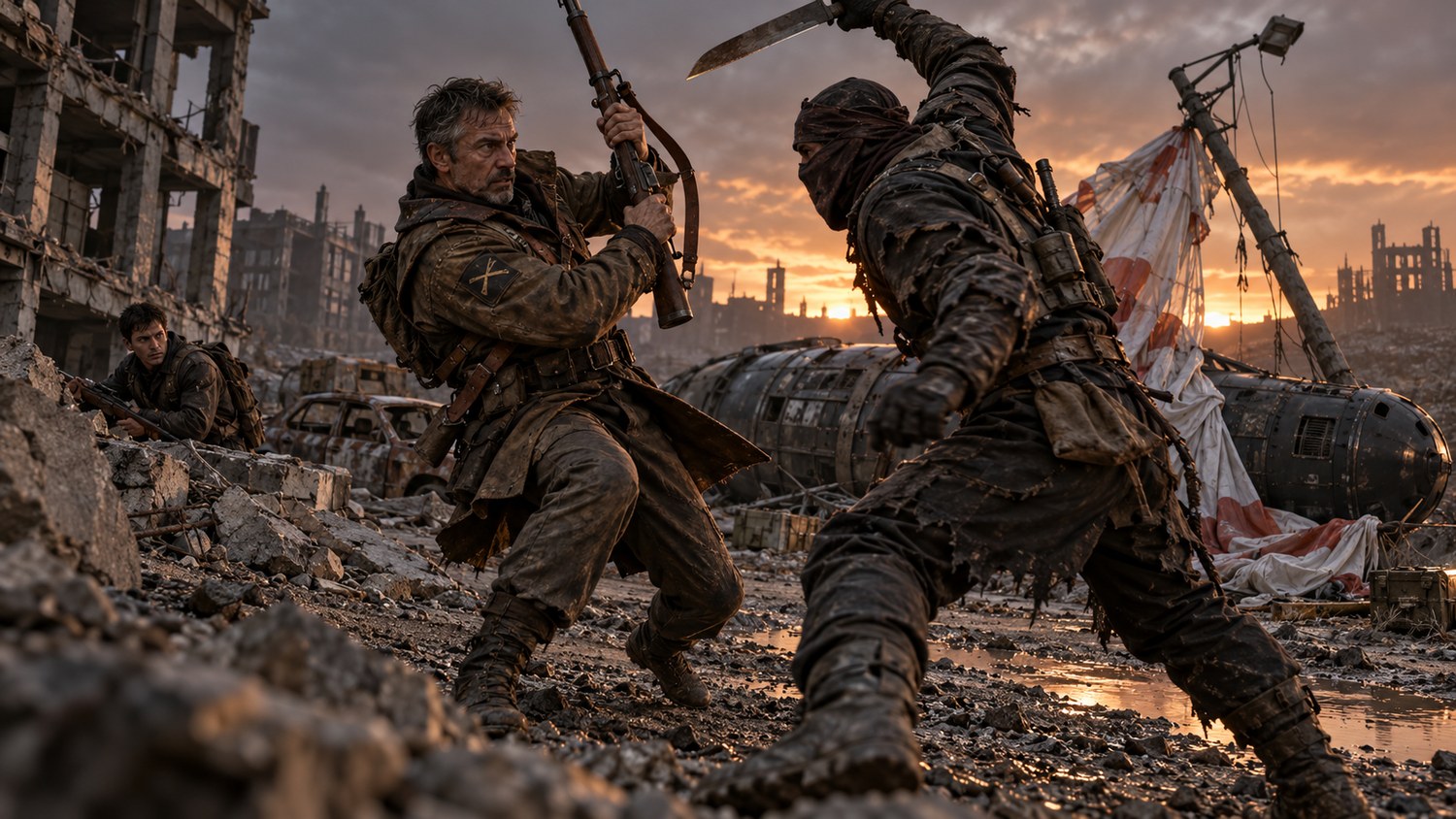
"Can't kill what's already clean," he snarls, and drives the butt of the cleaver into my chest, and I go back three steps over rubble that would turn an ankle, the wind knocked clean out of me.
"Then you must be filthy as the rest of us sinners." I drive the stock into his face. The skull mask cracks straight down the middle, and through the crack I get a flash of gray scarred flesh and teeth gone to brown ruin and one pale eye rolling, and he rocks on his heels and does not fall, and I am out of clever and nearly out of ground.
Gregor saves me being either. He hits the man low from the blind side, crowbar hooking the back of a boot, and the leader goes over backward with his own weight against him now, and Mavrek is on his chest before the body has finished its bounce, driving the knife down into the throat above the collarbone and leaving it there. The leader's hands come up and find Mavrek's forearms and close on them, almost gentle, almost a man steadying himself on a trusted friend at the end of a long night, and then the strength runs out of the fingers and they slide off and lie open in the dust, palms up.
The last of them turns to run. Isolde steps out from behind the rusted hull of a dead car with her pistol held in both hands as I taught her, and she fires once, and the round takes him between the shoulder blades, and he goes down face first and slides and is still.
"Everyone breathing?" My chest heaves like a bellows with a hole in it.
Gregor spits red into the dirt and drags the crowbar along his thigh to clean it, and the red does not all come from his mouth. "Breathing enough to complain. Same as ever."
Mavrek nods. His hands shake on the stock of his rifle, knuckles gone bone-white, the whole fight still running through him with nowhere left to go but his hands. "That all of them?"
"For now." I look at the field we made of the lot. Bodies, and the parts of bodies, and the ash gone dark where the blood is sinking in, over the stains of other blood that sank there before it. The burnt-powder stink lies over the older stink of the men themselves, who did not wash in the religion they died for. My arm is open from the hook and the blood comes steady and warm down to my fingers, and across my ribs a deep bruise is already waking where the butt of the cleaver drove the breath out of me. A thought comes to me, plain and small, that I will feel all of this for days if I am given days, and I fold the thought up and put it away in the drawer where I keep such things, which is full, and which I have learned to shut anyway.
"Take what we can carry and we go," I say. "They'll have friends, and friends come looking."
We do not linger. Packs stuffed to the seams, we fade back into the flats and leave the Feast of the Pure to cool in the lot behind us, and I do not look back to see whether the leader's open hand has closed.
Every step we take from the lot raises the dead. The ground out here is ash and ground bone both, the leavings of year on year of wind working at what the fire left of cities and the people who filled them, and it lifts off our boots in a pale smoke and coats the back of my throat and the inside of my nose and the wet corners of my eyes. By the time the sun is halfway down we are tasting our own kind with every swallow, and there is no water to waste on rinsing them out of our mouths.
Gregor is breathing wrong. I hear it before I turn and see it, the catch and pull of a man working too hard at a thing that used to come to him free. He has had a hand pressed flat to his gut since the lot, and the fingers of that hand shine in the low light, and the shine is dark. He does not name it. Naming it was never his way. He sets one boot down past the other and drags the whole long weight of the war behind him and keeps the pace by nothing but the stubborn fact of being Gregor.
"You're slowing us, old man," Mavrek says. The boy is scared, and in a young man the fear comes out sideways, as temper. He keeps throwing looks back over his shoulder, like the Bloodtithe might rise up out of the dust we left them in and come finish the conversation.
"Shut your mouth," Gregor says, and there is little bite left to put behind it. "I walked this country before your mother made her worst decision and brought you into it. I'll stop walking when I am dead, and not a step before, and I'll thank you to let me pick the spot."
"Nobody stops." I put myself between them, a wall of one. "We don't leave people. That's the only rule we've got left that's worth the breath it takes to say."
Mavrek laughs, short and ugly, a laugh with no floor under it. "That rule is going to get us killed, Joey. All of us. For one man who's already"
"Finish it," I say, quiet, "and you'll wish the dogs or the cults had got to you before I did."
He doesn't finish it. He swallows the rest and drops his eyes to the dirt, and the shame that rises in his face is a better thing than the fear was. I don't need a mutiny stacked on top of everything else that has already gone wrong today.
Isolde has Zariel by the hand, and the girl's short legs are working double to hold the pace. She does not cry. She does not speak. She watches the far edge of everything with her eyes gone wide and glassy, and now and again her free hand drifts up and touches the ear of the rabbit where it rides in the top of her mother's pack, confirms it is still there, lets go, drifts up again. She does not know the names of the things that live in this dark. She knows enough to fear them without the names. Smart child.
The sun goes into the clouds and the clouds take its color, orange bleeding down into a deep arterial red through the permanent gray, and the light that reaches us through all of that is the light of a thing cut open and left to drain. Shadows reach across the flats long and broken and jointed wrong. There is a copper taste riding in under the bone dust now, and copper means a hot zone close, and the rot that rises off those places takes the brave man and the coward at the one rate, slow, from the inside, starting in the soft tissues, and you do not feel it start until it is well along in you.
Isolde had word of an old NIS substation standing east of us, untouched, from the same dead trader who talked up the Bloodtithe. I put no faith in a corpse's rumors. That trader got more good folk killed with his talking than the cults and the raiders managed between them with their knives. But shelter is shelter when the dark is coming down, and the dark out here is not a thing a person wants to meet standing in the open with nothing at his back, so we turn toward the rumor. There is nowhere else left to turn.
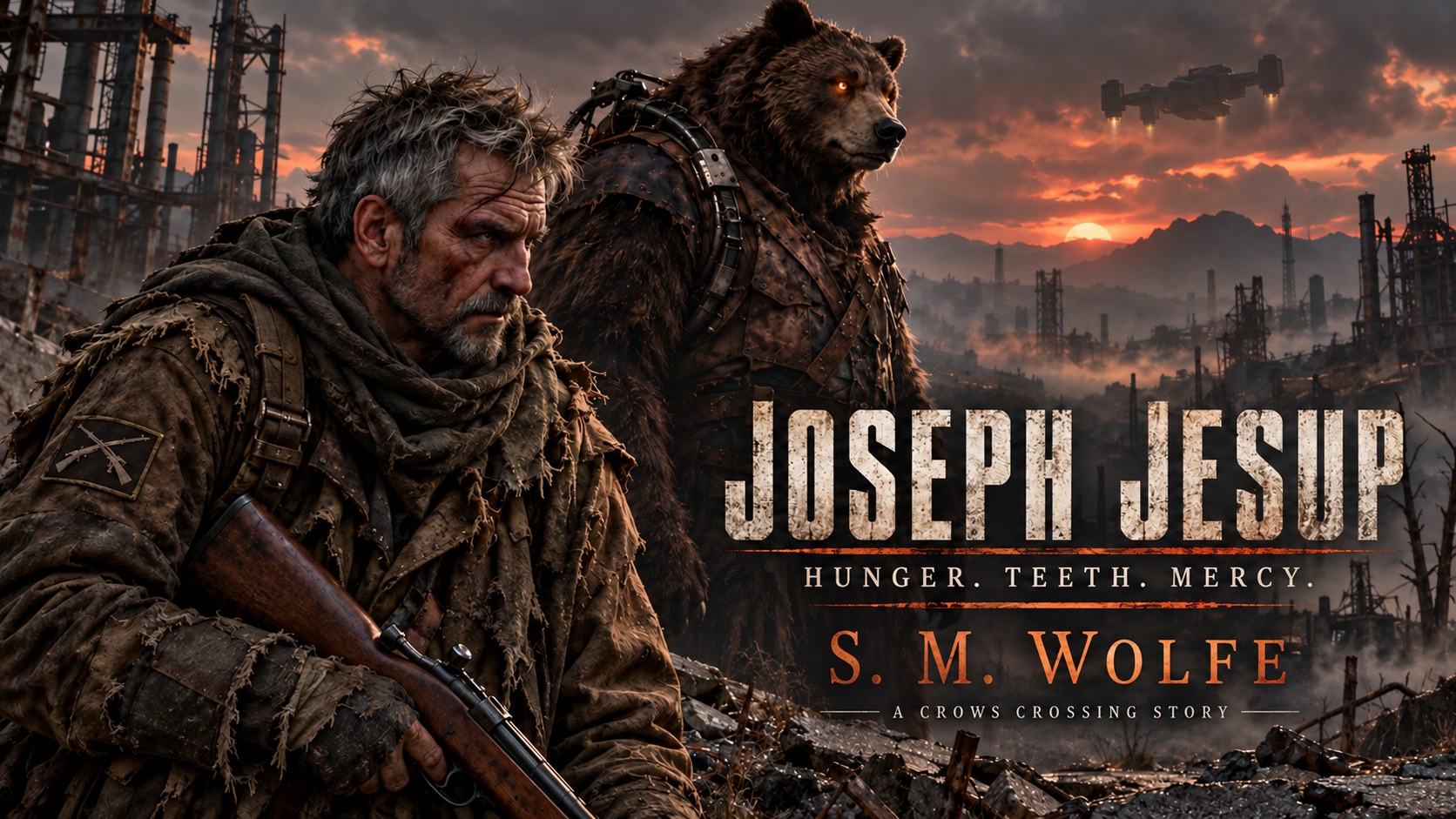
The first time I see the dogs it is a flicker at the edge of my eye. A shape slipping between two rocks, quicker than wind has any right to move. My hand goes to the rifle and the weight of it is there, steady, familiar. I thumb one of the last three shells out of my coat pocket and feel the embroidered crest stitched above it without needing to look. The crossed rifles of the 24th. I carried them through a war that had generals and maps and a reason printed on paper, and I carried them out the far side of it into a world that had none of those things, and the shells are older than Zariel and I have been saving them for a day worse than any I have met, which tells you what kind of faith I keep. I say nothing yet. No sense spooking the others before I am certain.
Then another shape. Then a third, low and loping, pacing us from the flank and making no secret of it now.
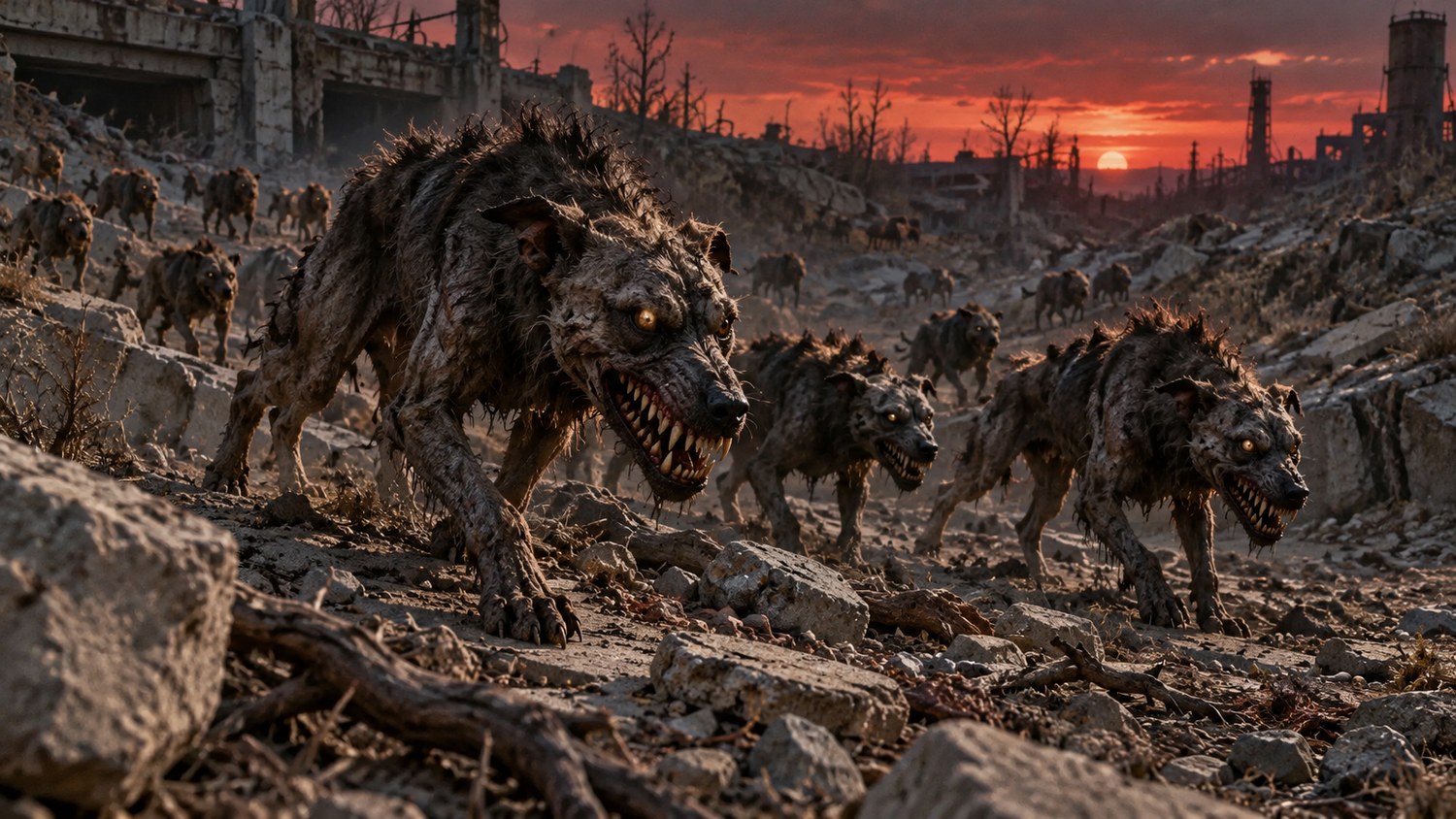
They hold their distance. They watch. Their claws tick on stone and their low talk rolls through the ground and comes up through the soles of my boots into my teeth, and they are too small for wolves, and small means many. Dogs run in packs of fifty and more when the eating has been lean. The hair stands up along my forearms and down the back of my neck, and I know it in my gut, cold and certain, that we are already inside the thing and have not yet felt the jaws begin to close.
"Joey." Isolde, hardly a breath at all. "What is it."
"Dogs," I say, low. "The changed kind. Hungry, I'd wager, if a wager meant a thing anymore."
Gregor curses under what breath he has to spare and leans harder on the crowbar he has turned into a crutch. Some other day the sight of it would be a joke, a big hard man hunched over a bent iron bar. Not today. Mavrek's rifle comes up and sweeps the gathering dark, and his finger is too near the trigger, and I don't correct him. Zariel presses her face into her mother's side, and both of her small hands find the rabbit and stay there, holding on.
"How many?" Mavrek asks.
"More than the shells I'm holding." I keep walking. Walking is the only answer that does not end us where we stand. "They haven't come yet. They're reading us. Taking our measure, working out whether we're worth the teeth it would take."
"Wonderful." Gregor's voice is thin as paper held to a candle. "Something out in the dark is sitting down to decide whether we're worth the chewing."
We keep moving and the ground tilts up under us and every step takes more out of me than the one before, the air gone thick and close and pressing down with the smell of the hot zone in it. The dogs keep our pace off in the murk, their eyes catching what little light remains and throwing it back dulled, like coins left out in weather. I catch pieces of them between the rocks. Hide gone in patches to raw weeping skin. Limbs set wrong at the joint and working anyway. Jaws that will not fully close for the teeth crowded into them, too many teeth, grown in rows. The sickness that made the hot zones made these, too, out of what used to be somebody's hound curled warm by somebody's fire in a house that is gone now with the somebody inside it.
It is Gregor who says the thing none of the rest of us will let ourselves say. We are down in the cut of a dry creek bed, backs to the crumbling bank, stealing a breath we cannot afford, when he straightens as far as the wound in him will allow.
"You can't outrun them," he says. Flat. Settled. A man reading aloud a verdict he wrote himself some hours back and has sat with since. "Not dragging me you can't. And you won't leave me, because you're a fool with a rule. So I'm taking the choice off you."
"Don't," I say. But he talks over the top of me, gentle, and he has bought the right to with the day's blood.
"I am not asking, Jesup. I'm telling you how the night goes from here. You get them to that station. You get the girl behind a door. And I'll stay down here in this ditch and give these things a reason to stop running and start eating that keeps their mouths full long enough for you to disappear."
Isolde's head goes side to side and the tears cut clean bright lines down through the dust caked on her face, the only clean lines on any of us. "No. We don't just leave you to"
"You do." Gentle, for Gregor, who has not been gentle in the years I have known him. "I'm dead weight and I drag heavier by the hour and you all know it down in your teeth and have been too kind to say. Let me put one morning between that child and these jaws. Let an old man be worth something on his way out the door instead of nothing on the floor of it."
I want to tell him he is wrong. I want to say we go out whole or we don't go out at all, say it and mean it and have it be true as it was true when I was young enough to believe saying made it so. But I have watched his eyes since the lot, and the man behind them packed his kit some miles back and has only been waiting for a decent place to set it down. Some things break in a man past any mending, and Gregor is broken clean through in the part that turns a man's face toward the next morning.
"Thank you," I say. It comes out of me no bigger than a whisper and I have nothing larger to send after it.
Mavrek watches me give Gregor the thing I threatened him for naming not an hour back. He says nothing. He does not need to. The look he lays on me, and then takes away, says it for him.
He nods, and that is the whole of it, every year we rode this ruin together folded down small and tucked into the single tip of his chin. We leave him standing in the creek bed, as tall as he can make himself with that hole in his gut, crowbar in one fist and a rag-stoppered bottle of the last of our lamp oil in the other. He lowers himself to one knee, slow, to put the flint where his hands can find it. The last of Gregor I carry out of that ditch is the sound of him laughing, big and defiant and strangely glad, rolling up out of the dark behind us as the ticking of claws turns all at once to a rush and a rush turns to a roar. I do not know if he was right. I have turned it over every night since and it still will not come clean in my hands. Some nights I grant him the morning he gave her and it is enough to let me sleep. Some nights it is not, and I lie awake in the dark and run it back and it still will not sit where he wanted it to sit.
The substation rises out of the flats like the carcass of something that lay down in the open to die and never finished rotting. Its metal hide is split and peeled back in long curls high up the flank, past any reach, the gaps giving onto a black too deep to see into. Down where a body might climb, the breaches are choked to the lip with fallen roof and conduit, welded by old fire into a second wall behind the first. The fence around it leans every direction at once, more the memory of a fence than the fact of one, and the warning signs have gone to rust and grime past any reading. Untouched, the trader swore. Untouched my bleeding arm. But it is walls and the suggestion of a roof. It will do.
Mavrek is dragging, his breath sawing in and out of him. Zariel has her mother's hand clutched in both of hers. The dogs are a sound on every side of us, a low rolling growl that comes from no single place and so comes from all of them, and their smell reaches me a half-second ahead of the growl, wet hide and a sweetness gone rotten underneath it that I know too well.
"Inside," I say. "Now. Move."
Mavrek throws his shoulder at the main door and it holds and groans and holds. There is a plate bolted beside it, sand-scoured near to blank, and I can still make out what it says if I squint through the dark and the blood in my eye. NIS SUBSTATION ZETA EPSILON 42 KILO. The letters mean nothing to me. They mean only that we have reached the place the dead man promised, and that a dead man's promises are worth about what you would expect.
Isolde has stopped with her hand flat on the cold metal. She is not looking at the door. Low on the wall a housing sits half-buried in grime, and deep inside it a single bead of green burns steady, not the flicker of flame, not the dull glow of anything the war left behind. "That's lit," she says. "Dead junk," I tell her, and we both pretend I know that, and we move.
"Jammed," Mavrek grinds out, and hits the steel with the side of his fist, which accomplishes nothing but splitting his own skin. "We don't have time for"
He is right, we don't. The howls behind us are climbing over the top of one another now, closing, no longer the sound of the hunt but of the hunt run down, the sound they make when the quarry has nowhere left to go, and I can feel it in the floor of my chest where my own heart is making a smaller, faster echo of it.
"Another way in," I say, and I am already moving along the wall with my good hand reading the metal. "Go. Stay on me."
We round the corner and there it is, a side hatch half-swallowed in a slide of fallen rubble, warped in its frame but not sealed. "There," I say, and point, and Mavrek charges it without a word. I take the rear with the rifle tight to my shoulder and my head on a swivel, and the dark on every side of us is full of slow sure shapes now that no longer bother to hide behind the rocks.
"They're close," Isolde breathes.
The first growl rises off the left. The second answers off the right. The dogs walk out of the gloom into what thin moonlight is getting through a hole in the cloud, and the sight of them stops the spit in my mouth and dries it there. Skin drawn so tight across them that the bone shows white at the hip and the long skull. Jaws that hang because the teeth will not let them close. One throws its head back and lets out a long broken howl, and the rest take it up, and the sound of it hums in the ground and in my boots and in the fillings of my teeth, and Zariel makes a small sound against her mother that is the most terrible thing I have heard all this terrible day.
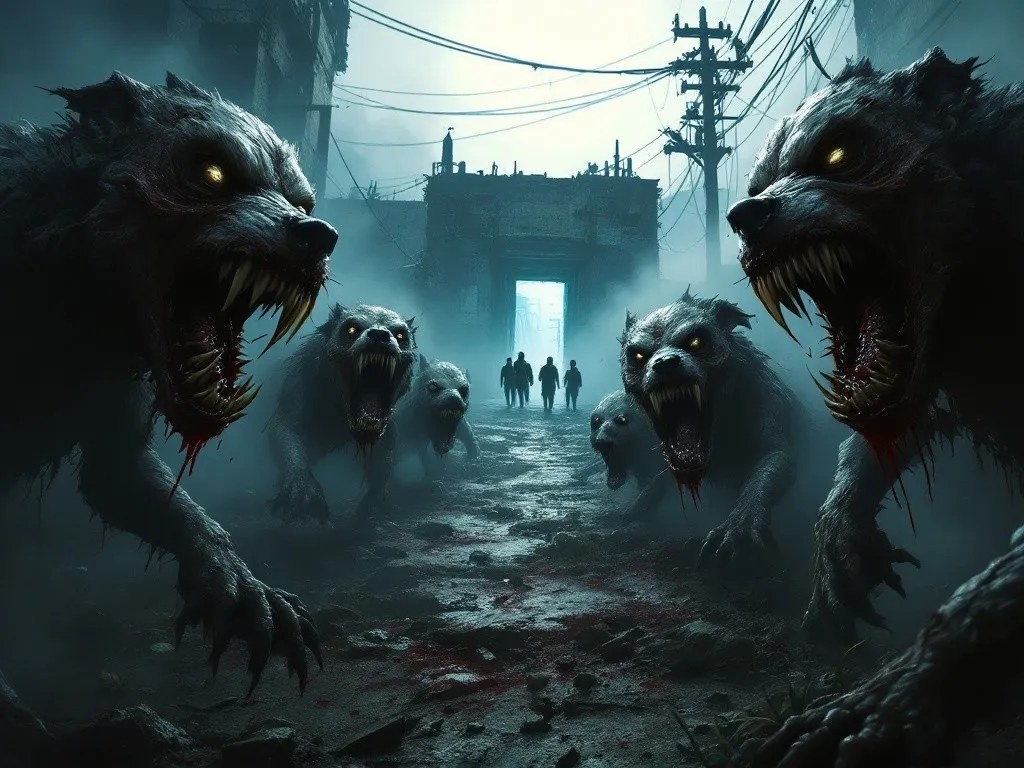
"Joseph," Mavrek calls, hauling at the hatch with both hands and all his weight.
"I know," I say.
The first dog leaps. I fire before it finds me and the round takes it through the chest and it drops and tumbles and lies still, and not one of the others so much as breaks stride at the death of it. They flow. Low and quick and smooth over the broken ground, claws scratching stone, and there are far too many eyes coming for the two shells I have left and the knife at my belt and the arm that will no longer fully close its fist.
"Down," Mavrek barks, and I drop flat and his rifle opens up over my head in a hot bright stutter. Two dogs skid and roll and do not get up. More come over the top of their dead, who are nothing to them now but ground to be crossed.
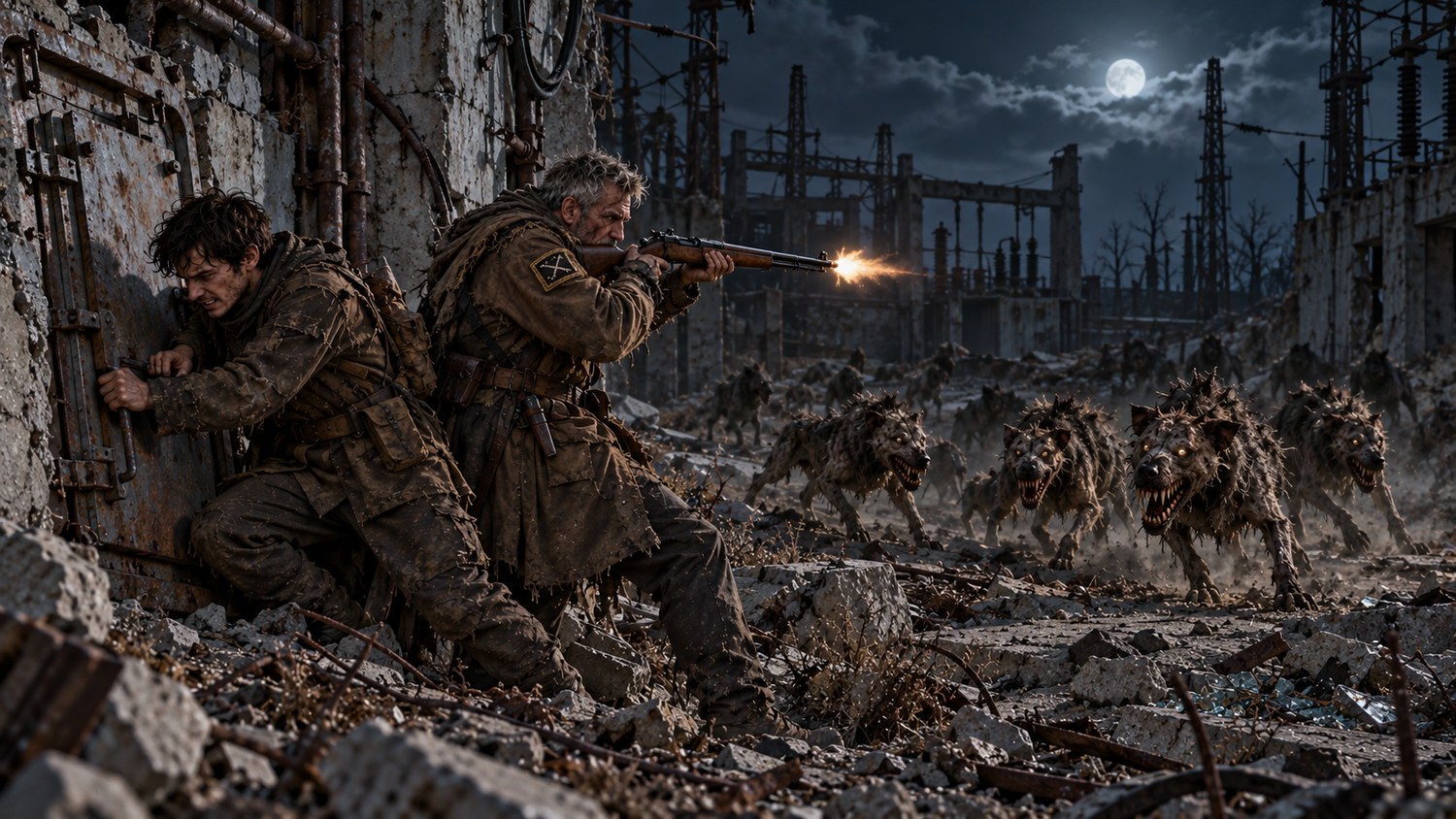
"Hatch won't give," he yells, and his voice cracks on the word, the boy scared clean through at last.
"Then we don't go in that way." I put my next-to-last shell into the thickest part of them and something in the dark screams like a kettle. "Behind me. All of you. Get behind me and stay there."
Isolde puts her back flat to the wall and folds herself down over Zariel and makes of her own body a smaller room with the child shut inside it, and her eyes above the girl's head are wide and fixed and already gone over into the cold country that lies on the far side of fear, where there is nothing left to be afraid with.
One dog comes in low and I swing the rifle like the club it has become and the stock catches it across the long skull and folds it down into the dirt. Another hits me broadside before I can recover the swing, and its weight takes me off my feet and down onto the stone, and the teeth find my forearm, the same arm the hook opened, and close. I hear the closing before I feel it. Then I feel it, white and total, the world gone down to one burning point of contact, and my rifle skids out of my hand and away across the rubble out of reach. The dog's breath is hot and foul in my face and it works its jaw deeper into the meat of me, worrying, and I get my free hand on my knife and I know even as my fingers close on the grip that it will not be enough, that there is not enough knife in the world for what is coming across that broken lot.
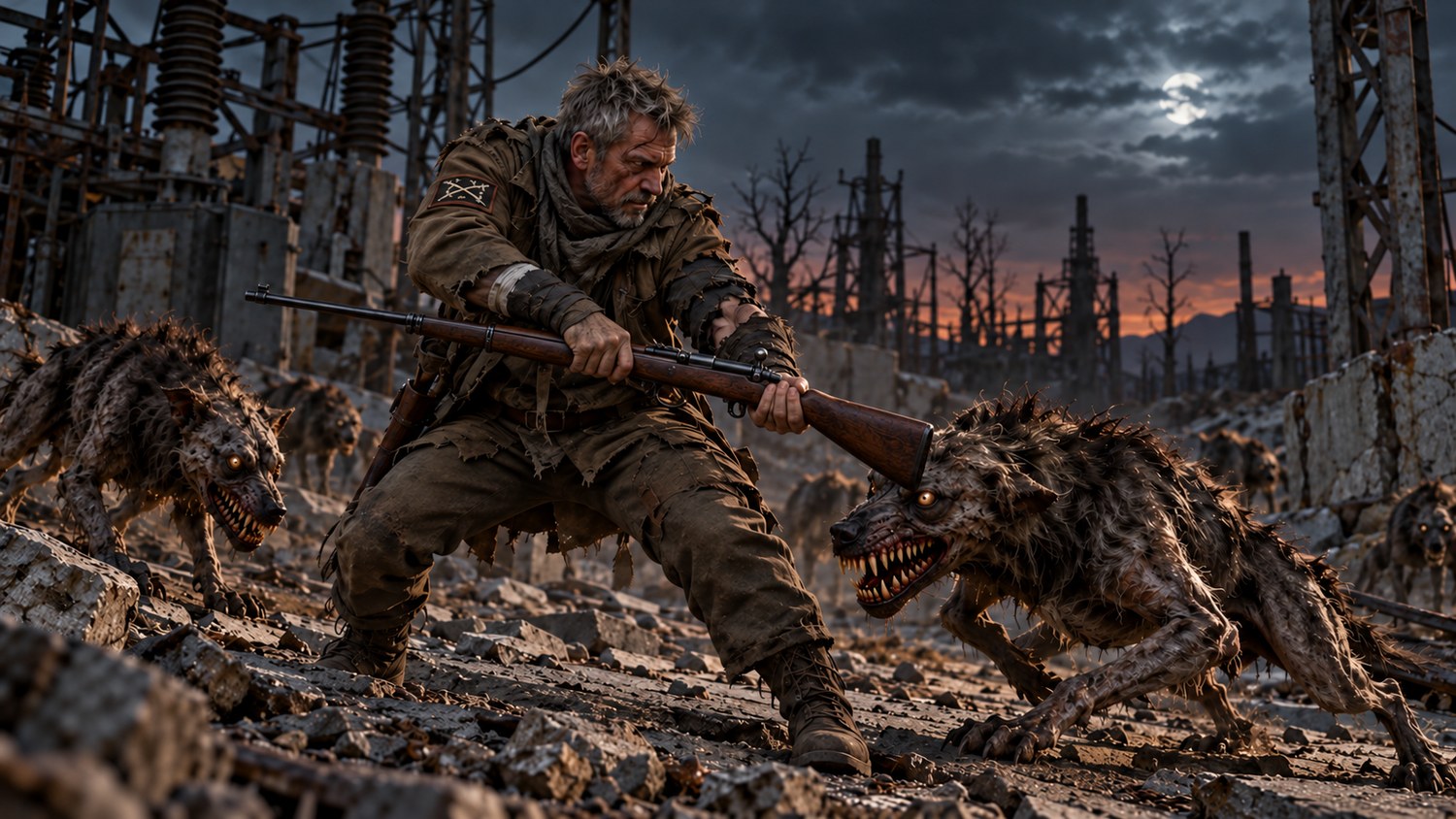
"Joseph!"
Mavrek's boot comes into the thing's ribs and something gives with a crack, and the jaw lets go, and he takes it by the loose hide at its neck and swings the whole writhing weight of it off me and into the wall, where it strikes with a sound I feel in the column of my own spine. Blood runs down my arm hot and quick and I have not the time to be afraid of how much of it there is. I get my feet under me. Another comes and I drive the knife up into the soft hollow under its jaw and ride the dying weight of it down to the ground and twist the blade, and it comes apart in a wash of black over my fist, and still they come, and the small burning eyes of them multiply in the dark until they are the only stars left in all that ruined black.
"Can't hold," Mavrek shouts, firing into the mass of them, and then the dry click of a hammer falling on an empty chamber, and he stares at the rifle for one half of one second like a man betrayed.
I look at Zariel's face turned up out of the cage of her mother's arms, streaked and small and watching me, waiting to see what I will do about this. She is eight years old. I am the biggest one still standing. In the whole of her short hard life that has always been enough to make a bad thing stop. In a moment it is going to stop being enough, and she is going to watch it happen to me.
I have one shell and a knife and an arm that will not make a fist.
The largest of the dogs comes to the front of the pack and the rest give way and make it room. Muscle rolls under the ruined hide. Its eyes burn brighter than any of the others, a wet sick shine at the back of them. Its chest and shoulders are soaked black and slick, and the black is not its own blood, and I understand all at once whose it is and what the pack ran down in the creek bed we climbed out of, and my stomach turns over hard on nothing. It opens its throat and the sound that comes out of it is bigger than a dog has any business making, and the pack draws in tight around it, and I take hold of Zariel's eyes with mine so that if this is the last thing the child is to see in this life it will be a face that loved her without condition and without end.
I take a breath. I make it a good one. I have had a good run of them, all things weighed, more than most out here are given, and I find in the last second that I am not afraid, only sorry, and the sorry is all for her.
The dark comes apart in light.
A crack splits the night straight down the middle and the ground kicks hard beneath me, and the whole pack freezes mid-stride with their heads snapping around as one single animal toward the source of it, and a second crack follows the first, and the great alpha's nearest flankmate drops in a boneless heap with pale smoke rising off the ruin where its shoulder used to be.
I blink the blood out of my eye and I find him.
He stands eleven feet if he stands an inch, a wall of dark matted fur and old leather plate stitched and riveted and scorched down one whole side, armor that has been through a hell and carries the marks of it plain. A Kraxis. A bear-built one, the kind they grew and forged to break a battle line and then stand in the gap it left and hold the gap alone. His shoulders throw back what little light there is, and in one great fist he holds a pistol with a yew-wood grip worn pale and smooth at the heel from a grip that has held it a very long time, its barrel lit from within by a green glow, and he holds it leveled off at the pack as steady as a fixture bolted to the bones of the earth.
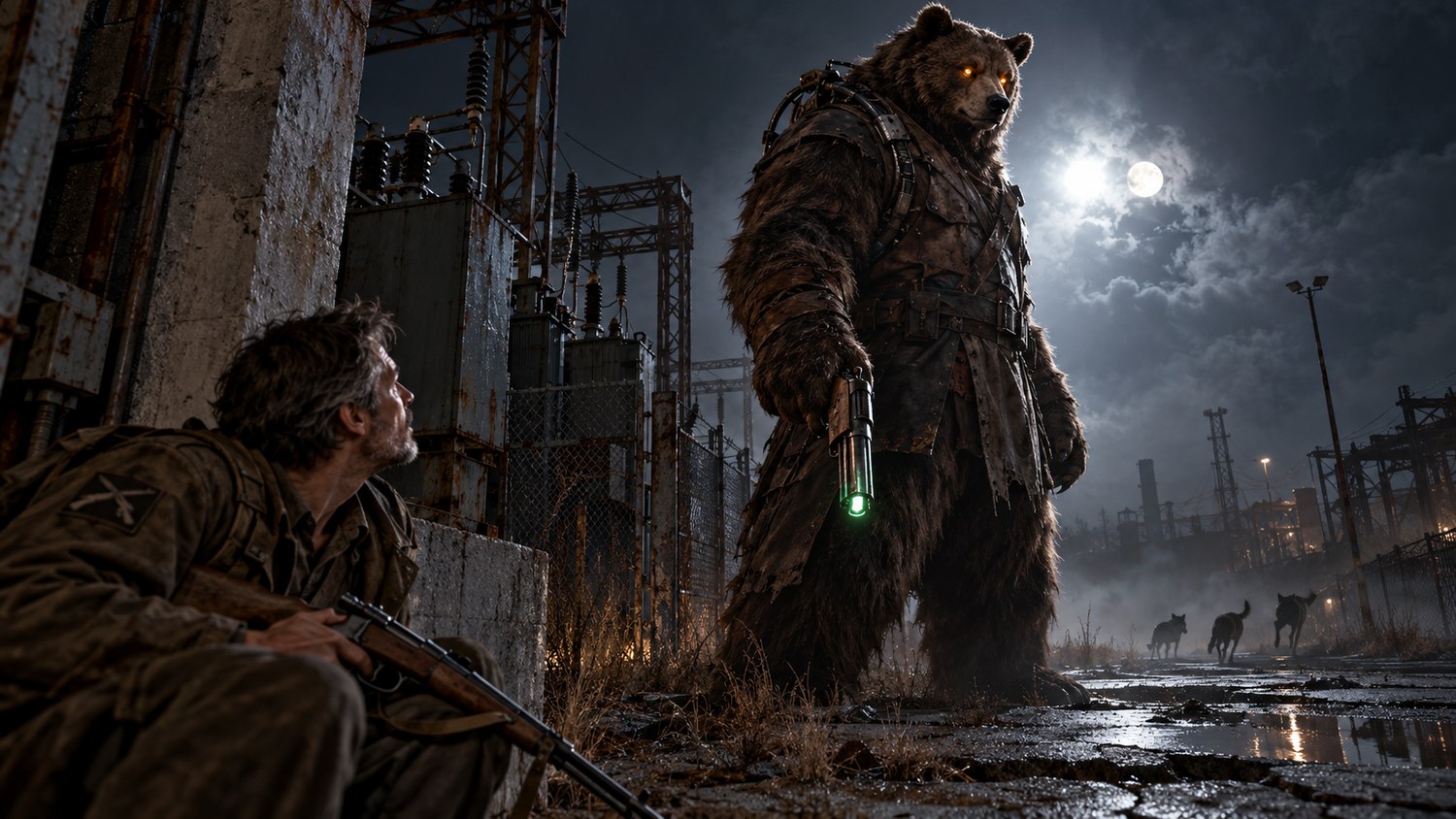
My hand tightens on the knife, which is a fool's comfort against what has just walked into the light, and I tighten it anyway.
I know the shape of a Kraxis. Everyone left alive on this scoured ground does. Techno-sentient, grown and built in the one body, out of the enclaves of a company with a bird somewhere in its name. Crows Crossing. I saw one in the war, the one time, from a distance I have since thanked God for. A warhorse model, they called it. It took a town apart stone by stone with nothing but its own two hands across a single afternoon, and it did not hurry, and the quiet that came after was worse than any noise the town had made while it stood. The story they fed us in the trenches afterward was that the things could not harm a human being, that they were grown and coded gentle, made only to shepherd and to mend and to carry the weak. I have walked down the main street that warhorse made of a town. I have smelled what it left cooling in the doorways. I have never since trusted a kind word spoken about them by anyone who had not. A thing can be built for mercy to the last line of its making and still be found standing in the wreckage of everything you loved, and I do not know how both of those are true at the one time, and I have had all the years since to work at it, and I only know that I have seen both with my own eyes and have carried the two of them ever since.
The Kraxis tips his great head. His eyes are amber, or would be, somewhere quieter than this. They do not sit quiet now. They have come up lit from behind, no pupil in them to speak of, two coals moving in the dark of his skull and throwing a thin glow of their own down across the dead, and they catch on me for half a heartbeat and move on, reading the field, counting the teeth, and I feel myself weighed and set aside as not the problem.
Then he moves.
The pistol speaks again, faster than my eye can follow the hand that fires it, and two more dogs come apart in bursts of green fire, and the Kraxis is already in among them, already into the heart of the pack, faster than anything that size has any right in creation to be. A dog springs for the throat of him. He drops one shoulder and lets the leap pass clean over and comes up out of the drop with a short blade in his other hand, a thing that was not there a moment before, and it hums as it moves, a high sweet note like a wasp sealed in a jar, and the blade takes the dog through the middle in a single unhurried draw and the two halves of the animal land apart and far. Another comes off his flank and the pistol finds it in the middle of his turn and punches a hole through its chest and through the chest of the one crowding in behind it, both at the one shot. Spent heat vents off the gun's spine in a thin hiss of steam that catches the green light and glows.
He holsters the pistol against his chest rig without looking, pivots on the ball of one enormous foot, and catches the next dog out of the air by its skull in a hand that closes over the whole of it. The animal thrashes and rakes its claws down the leather plate and leaves not a mark. The great hand tightens once. The skull comes apart like summer fruit left too long in the sun, and the body drops loose and empty from his fingers, and he has already turned to the next before it finishes falling.
The rest of the pack does not get to go on being a pack. Each stroke of the humming blade closes a whole life inside one motion, nothing wasted, no second stroke required anywhere. The pistol returns to his hand between one dog and the next with no hitch at all in the flow of him. Green fire opens the dark over and over, strobing the lot in stutters of light, and in each stutter I see him caught mid-motion in a different attitude of killing, and in none of it is there any hurry or any joy, and the lack of the joy is somehow the most frightening part, worse than the warhorse, worse than the town. It is a craftsman at a work he mastered so long ago that it takes nothing out of him now, not effort, not even the small attention a man gives his own breathing. The smell of burnt hide and clean lightning fills the lot. Inside the span of a single held breath the whole field has gone still and smoking and ours.
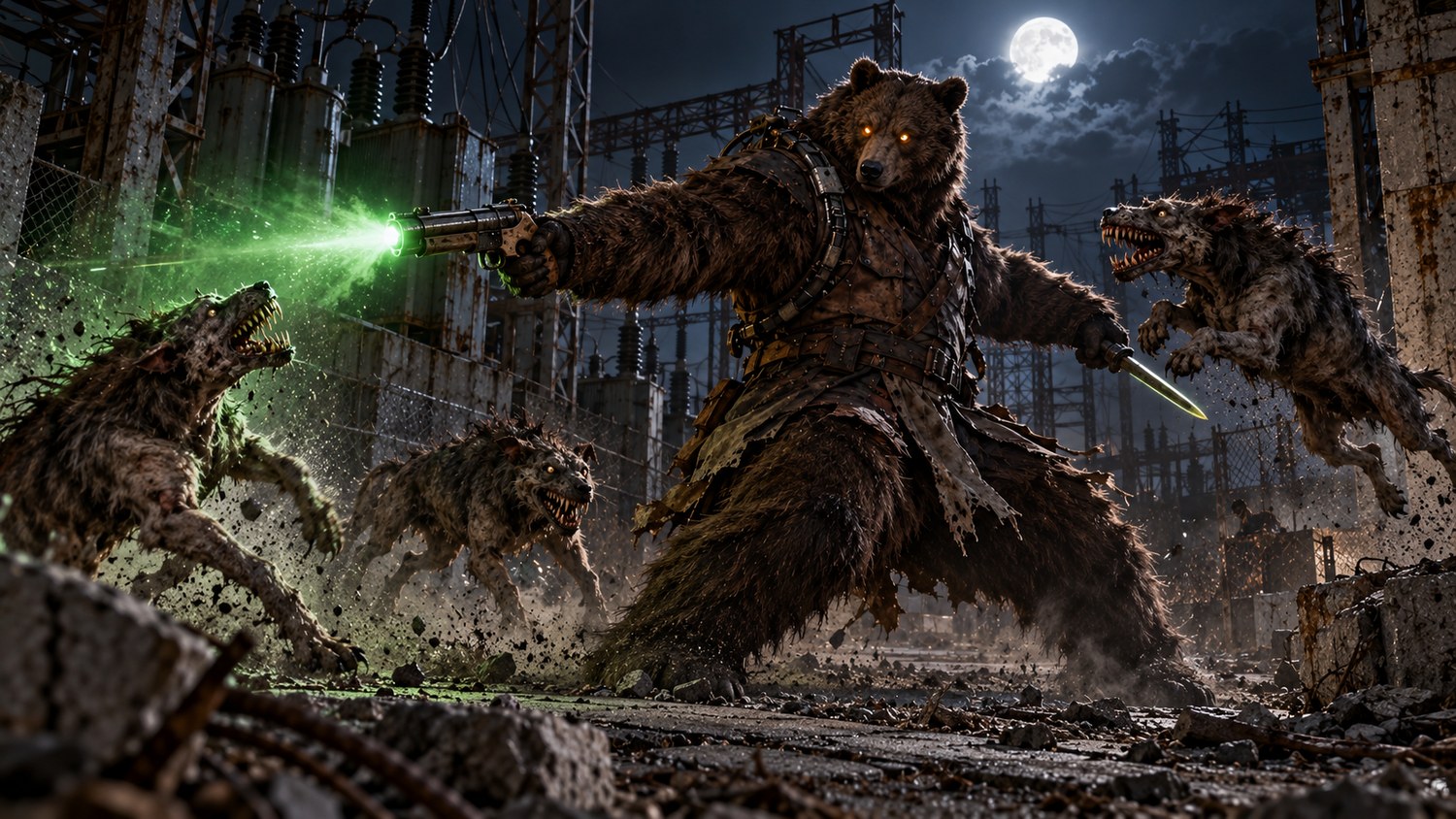
The last dog breaks from the carnage and runs for the dark. The pistol comes up almost lazy and the green bolt takes the animal before its third stride and it falls and slides and becomes one more shape in the dirt no different from any other.
I am on my knees in the blood, mine and the dogs' run together into one, holding my ruined arm against my chest, my breath coming in pieces, and the Kraxis turns to me, full on, and his eyes find me again, and I wait to learn whether I am the problem after all.
"Oy." The voice that comes out of him is deep and warm and easy, pitched light as a dry leaf let go of in still air, and it has an edge of honest amusement down at the bottom of it that I was in no way prepared for. "What's good?"
I stare up at him. The words reach me late, through the ringing in my skull.
"You lot always look like this," he goes on, conversational, holstering nothing because nothing is left to point the gun at, "or did I catch you on a special occasion? Because I have to tell you, friend, you look like something a dog ate and thought better of and brought back up to apologize."
"Who," I manage. "Who in the name of God are you."
He comes a step closer and goes down into a crouch, slow and careful, and even folded down into a crouch he stands head and shoulders over me. The light has gone back out of his eyes now the killing is done, left them a flat warm amber, the color of old whiskey held up to a low lamp. He is a dark warm wall that smells of ozone and old leather and, underneath that, of rain, a smell gone from this country for years. He takes my ruined arm up between two fingers and a thumb, delicate as a man lifting a baby bird out of the dirt, and turns it to catch what light there is, and his touch, from a hand I have just watched close over a living skull and crush it to pulp, is the gentlest thing that has been done to my body in longer than I care to think on.
He glances back over the great dark slope of his shoulder.
"Oi, mum." He means Isolde. "Round the front of the station there's an orange crate half under the slide. Be a love and fetch it. There's a stim inside, Re-Gen, green label, can't miss it. Unless you'd all rather stand about and watch this one empty himself onto my nice clean murder, in which case, no judgment, it's your evening, I'm only passing through."
Isolde stares at him over the top of her daughter's head. She has Zariel crushed against her and she does not let go to point or to answer. "What," she whispers. "What are you."
He does not look up from my arm. His thumb finds the edge of the wound and presses, testing, and I hiss through my teeth.
"Big," he says. "Furred. Devastating at parties, a terror at cards. The crate, love, while the man's still got blood enough left to make saving him worth my trouble. Go on."
She goes. I hear her feet break into a run in the dark. The Kraxis watches her go a beat longer than he has any reason to, watches the shape of her bent protective over the child even as she runs, and something crosses the amber of his eyes and is gone before I can name it, and he turns back to me and the lightness is back in place over the top of it like a lid set down on a pot.
"You people." He clicks a sound against the roof of his mouth, a tongue he may or may not have. "Such a performance, every time, over a little honest blood. You'd think none of you had ever been opened up before." He prods the wound again. "This? This is a scratch with delusions of grandeur."
"Scratch." I breathe around the word. "That thing near took the whole arm off me."
"Near." His mouth, if it is a mouth, pulls back off a great many teeth in a thing that sits where a smile would sit and is not one. "But it didn't, did it. It near did a great many things. We don't give medals for near. So. You're welcome."
Isolde comes back at a dead run with the crate hugged to her chest, and he takes it from her one-handed and thumbs the lid off and draws out the stim, a fat glass cylinder of pale green fluid that catches the amber of his eyes and throws it back warmer. He gives me no warning at all. He sets the needle against my arm and drives it home, and the push of it is ice gone over at once into fire, and the fire runs up to my shoulder and down into every one of my fingers at once.
"Son of a," I get out, and a good deal more after it that I would not say in front of the child if the child were listening to anything but her own heartbeat.
"Oh, hush your noise." He drops the empty cylinder back into the crate without looking. "Nanites. Give it thirty seconds and you'll be writing me poetry. You might even come out of it better than you went in, who's to say, I never did read the pamphlet, I find they take the fun out." He pulls a roll of clean white wrap from the crate. "Hold still and let me make you decent."
And the pain begins to go, and it does not go by inches. It pulls back all at once, and the blood at my arm slows and thickens and stops, and under the torn skin something begins to knit that I can feel working, a thousand small sewings all at the one time, and the strength walks back up into my hand finger by finger until I can make a fist again, and I make one, and open it, and stare at it. The Kraxis takes the roll of wrap and binds the arm around and around, and the size of his hands set against the smallness and the care of the work is its own strange thing to sit and watch, the patience in them, the ancient unhurried competence, hands that have done this ten thousand times for ten thousand strangers and have not yet learned to do it without care.
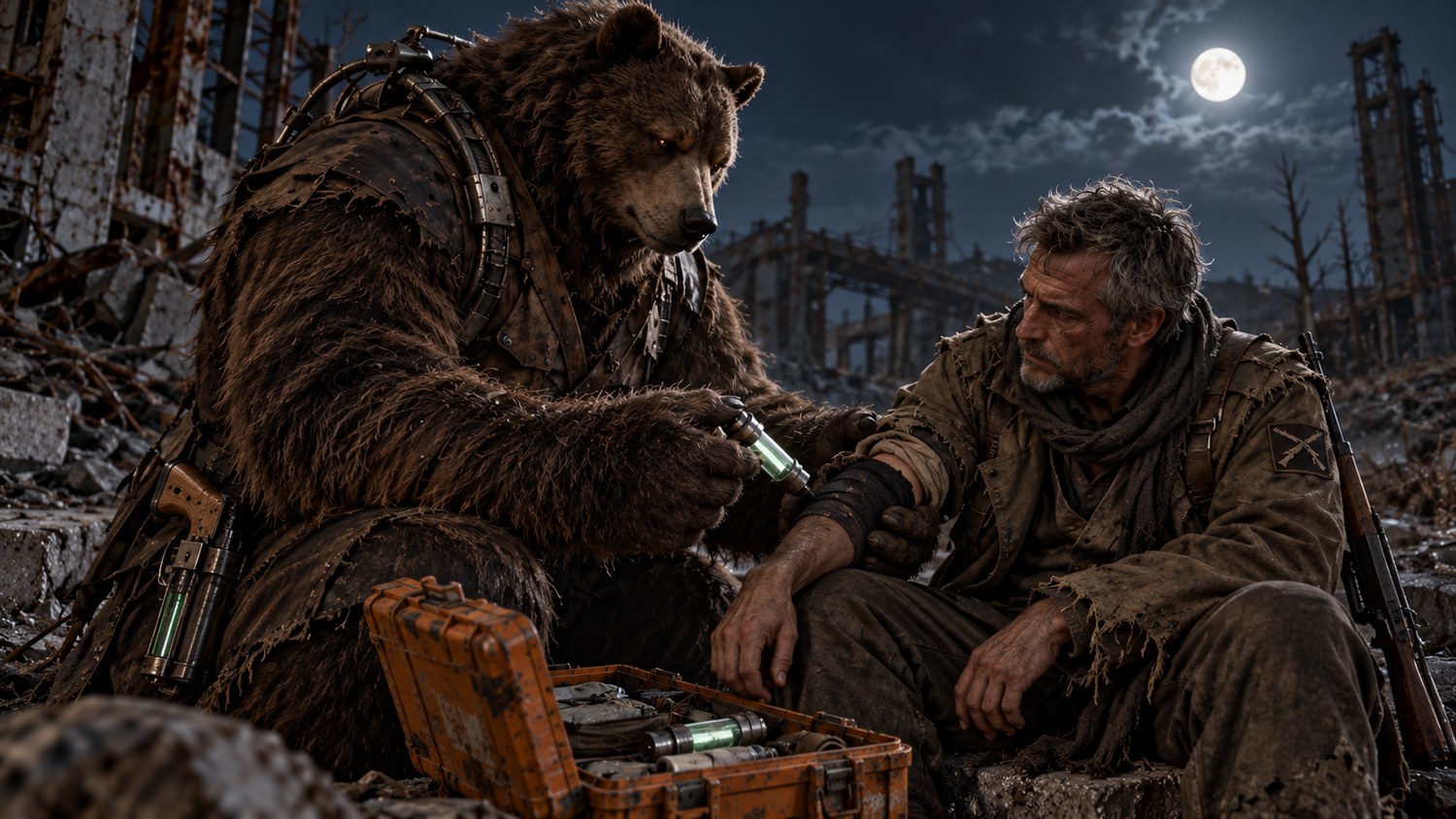
I keep opening and closing the hand, and I think of Gregor. Of the fist he kept pressed to his gut since the lot. Of the UTF cross on the kit in my own pack, gauze and iodine and a curved needle, and nothing in the whole of it that could have done what this green did in half a minute. Whatever walks the earth carrying this does not carry it for the likes of us. Gregor died a few hours short of it, and a few miles, and it was never once on its way to him.
"You're lucky I took a shine to you," he says, tucking the end of the wrap. "Most folk get the standard package. Bleed, thank me, limp off into their little lives. You lot get the full suite. Heated towels. Turndown service."
"Why," I say. My head is still a field behind the rest of me, struggling to catch up across broken ground. "Why any of this. Why us. You don't know us from the dirt."
His shoulders rise and fall, too big for the gesture, and for a moment he does not answer, and his eyes go to Isolde and the girl, and the girl has lifted her face at last out of her mother's chest and is looking at him with the open undefended curiosity that only the very young and the nearly dead can afford.
"Because I can," he says at last. "Because the day I can't, or won't, there's no good reason left for a thing like me to still be walking about frightening the wildlife." He is quiet a moment. "And because I've a soft spot, and it embarrasses me, and I've given up trying to cut it out. Believe me, I've tried. It grows back." He stands, unfolding until he blots out what little sky there is. "And because I need you upright and on your feet long enough to walk onto the aircraft I've called down, which is already inbound and will ruin what is left of your hearing when it sets down. So. There's that in it too, if a mercenary reason sits easier on you."
I look over at Mavrek. The boy is staring at the Kraxis like a man watching his own grave dug by a stranger who is whistling while he works. "The aircraft," he says.
"A Stormbreaker." The lightness comes back into the Kraxis, and I am starting to understand that the lightness is a thing he puts on, same as I put on my own bad jokes, a coat against the cold a man carries on his inside. "VTOL. Vertical lift, twin cannon, loud as the last day of the world and twice as handsome going up. You'll love her. Heated seats, I wasn't joking about the seats. There's even a meal service, after a fashion. I wouldn't eat it. I've seen what goes in it. But the seats." He kisses the tips of his great clawed fingers and flicks them open into the dark, and the gesture is so human and so absurd coming off a thing that size that Zariel, God help her, laughs, one single startled bell of a laugh, the first sound of its kind to leave her all day.
The Kraxis goes very still at the sound of it.
He looks down at the child, and the amber of his eyes changes, softens, floods with something that has no business living in a thing that kills as I have just watched him kill, and when he speaks again it is to her alone and the clown has gone out of his voice entirely.
"Hello, small one," he says, gentle as the hands that wrapped my arm. "There now. You've a good laugh in you. Mind you hold on to it. They'll try to take it, out here. Everything out here will try to take it off you, one way and another, for the whole of your life. Don't you let them. You keep it right where it is, down behind your teeth, and you don't hand it to anybody who hasn't earned the hearing of it." He reaches out one finger, slow, and with astonishing delicacy he touches the ear of the patched rabbit where it rides in the pack at her mother's shoulder, straightens it where it had bent. "And you mind your rabbit. A body needs something to hold that isn't a weapon. I had one once. Something to hold." He draws the finger back. "A long while ago now."
And there it is.
I have been a reader of men my whole life, first for the army and its purposes and then for my own, in rooms where a man's life hung on whether I believed the thing he was telling me, and I have learned there is a particular stillness that comes over a person when they step too near the edge of the one grief they do not let themselves walk up to in the daylight. I have worn that stillness myself. I wear it on the anniversary of a small grave with a girl in it who had her mother's chin. And I see it come over this vast and ancient and terrible thing kneeling in the blood of its own making in front of a child, the stillness, the half-step back from an edge, and I understand with a certainty I could not defend to another soul that whatever it is this creature carries, it is the same freight I carry, only older and heavier and with no bottom to it that it has ever been able to find.
"Who was it," I say. Quiet. One soldier to another across a fire. "The something you had to hold."
For a long moment I think he will not answer, will laugh it off, will put the lid back on the pot. His eyes have gone far, out past me, out past the lot and the dead dogs and the ruined station, out to some horizon that is not in this world at all. The amber in them stirs and takes a light while he is gone from me, and for one breath that light finds the worn metal of the pistol grip under his hand and lays a faint glow along it. I watch him reach for something that is not here, and find it not here, and take the finding standing, like a man who has done it a thousand times and learned nothing from it but how to stay on his feet.
"Her name was Astro," he says, to the dark, not to me. "They'll have told you, if they told you anything true about my kind, that we are bound to our people. Coded to them. It's a thin word for it, coded, it's what you'd say about a lock. It was closer than that. We were two notes of the one chord. I knew her thoughts before she'd finished thinking them and she knew mine, and there was no lonely in either of us, not ever, not once in all the years, because there was always the other one there in the quiet, answering." His great hand has closed, without his seeming to know it, around the worn pale grip of the yew-wood pistol at his chest. "She made me this. Out of a tree that grew in a courtyard in a place that is ash now with everything else. Said a weapon should have something living in it or it forgets what it's for. I've carried it three decades and never once let another hand touch it and I'll carry it until the day I go dark."
"What happened to her," I say, though I already know the shape of the answer.
"The world happened to her." Flat now, and far. "The same as happens to everyone's. There was a fire. I was across a city doing the thing I was built to do, which is kill whatever I am pointed at, and I was very good at it, and none of that was any use at all for the one thing I would have burned the world to do, which was be in a different room four miles west with my hand in hers when the ceiling came down." His eyes come back from the far place, slow, the light in them banking down to amber again, and they settle on me, and there is no clowning anywhere in them now, only a tiredness that has no end to it. "They tell me the bond is supposed to close when the other one dies. Scar over. Go quiet. Mercy, they call it, the going quiet." He is silent a moment. "Mine never closed. I still reach for her. Thirty years, and every hour of every one of them, I reach down the line out of habit, the same as your tongue finds the gap where a tooth used to be, and every hour there is nothing on the far end of it, and I have her die again in the nothing, fresh, as if no one had told me until this moment. That is what I am, friend, under the fur and the jokes and the fine shooting. I am a thing that cannot stop asking a dead woman a question."
Nobody says anything. Even the wind has quieted. In the whole smoking ruin of the lot the only sound is Zariel's small breathing, evened out now, gone slow with the beginnings of a child's exhausted sleep against her mother's chest.
"So I walk people out," the Kraxis says, and the lightness comes back up over it, worn thin now, and I let him have it. I know the mercy of the coat. "Out of the fire and the teeth and the cults and the dark, into the Enclaves, where there are walls that hold and water that runs and a child can grow up without learning the taste of ash. I couldn't be in the room four miles west. So I am in every other room there is, now, forever, for everyone else's somebody, since I could not be in the one that mattered. It mends nothing. Nothing will ever mend now." He stands fully, and brushes dog from his knee with a strange fastidiousness. "But the girl laughs. And that's a thing. On a good night that's very nearly a thing."
Then the engines of the Stormbreaker tear the quiet apart off to the south, and a dark shape comes down out of the bleeding red dark on four columns of thrust that throw grit and ash up into a stinging storm all around us. A ramp lowers off her flank with a hiss and a heavy clang, and warm gold light spills down it out of the hold, the first warm light I have stood in since the war.
"After you, fearless leader," the Kraxis says, sweeping one great arm toward the ramp, the clown fully back in place. "Unless you fancy staying out here to get better acquainted with the rest of the local residents. I can introduce you. They're a close-knit community."
I get up with Mavrek's shoulder under my good arm, though I find I hardly need it now. My legs hold. The arm the dog opened flexes clean and whole inside its white wrap. "Fine," I say. "But you're telling me the rest of it once we're in the air. All of it. What this is. Where you're sending us. What a thing like you wants with a handful of nobody."
"Oh, every word," he says, and the grin pulls back off the teeth. "The very moment I've got a drink in my hand. I never fly sober. Bad for the nerves I spend a great deal of effort pretending not to have."
And then he stops.
His eyes go far, and this time they do not stay dim with it. The amber wakes and climbs to something live and bright, bright enough that when he turns his head the glow of it slides across the dull metal of the ramp and brings up a color there that has no business in all that gray. Whatever lives behind them has gone off down the invisible line, out past where I could follow. It is the same look that took him when he spoke her name, and I know it now for what it is.
He comes back a moment later with nothing. Whatever he reached for did not answer, and he takes the no of it standing, as he must have ten thousand times before.
"Mm." The voice comes back by slow degrees, and the music is gone out of it. "Change of plans, children. Something's calling me home, and it's the sort of call you don't let ring, more's the pity, because I was rather looking forward to the drink." He is already turning. "The bird knows the way without me. She'll set you down safe inside the walls. When they ask you who sent you, you tell them Atam sent you, and you watch the color go out of their faces, and you enjoy it, it's one of the few free pleasures I've got left to give away."
Atam. He gives me the name and nothing to hang off it, and he walks down off the lip of the ramp, past us, past the smoking field of the dead he made in ten unhurried seconds, and he stoops and takes up the orange crate under one arm, careful of it, as if the healing in it matters more than the killing he carries in the other hand, and he starts back toward the broken dark front of the station with that same unhurried stride, a thing that has somewhere it must be and all the grief in the world to carry there. The dark closes over him a piece at a time, the great shoulders, the long arm, the pale worn grip of a pistol made for him out of a tree by a hand that is thirty years ash, until there is no shape left standing where he stood at all.
He does not look back. He does not wait to be thanked.
The ramp stands open, throwing warm gold light out across the ash, and not one of us steps toward it. I know this shape. I have known it since the war, when I watched a thing bred like this one walk a town into the ground from a hill a mile off. Now it sits there with its engines idling and its ramp down like an open throat, and we are meant to walk down into it on the word of a creature that has already gone into the dark.
Mavrek has his heels dug in. "We don't know where it takes us, Joey."
"No. We don't." Behind us is the cold, and the teeth still out in it. In front of us is the thing that undid the whole pack before I could get my feet back under me, and could undo us the same way if it took the notion. I am the one who has to choose for all of them, and I choose the thing I am afraid of.
Isolde does not wait for me to say it twice. She gathers Zariel up off the ash and carries her into the light, and that is what moves my own feet. I set my hand flat between the boy's shoulders, feel the shake running through him, and turn him toward the ramp. "We go," I tell him, and we go.
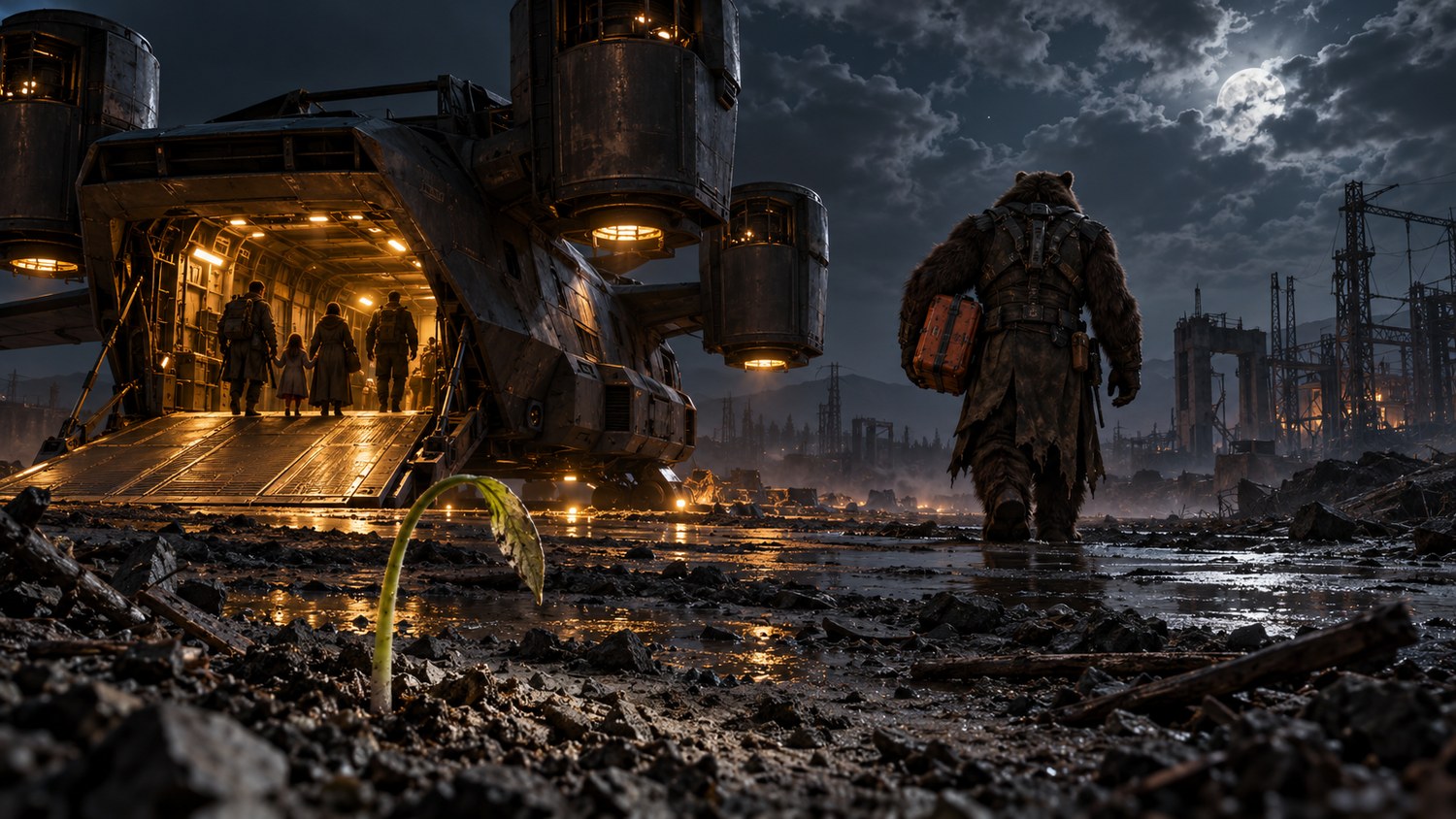
Harnessed into the warm gold hold with my arm bound clean and my body gone numb at last past the point of feeling, I watch the three of them in the seats across from me. Mavrek, his rifle empty across his knees and his young face emptied at last of the thing it had been holding all day, asleep before we clear the ground. Isolde, upright, awake, keeping her watch as she will keep it now until the day she dies. Zariel in her mother's lap with the patched rabbit crushed under her chin and both of its mismatched eyes, the button and the stitched black X, turned up toward the ceiling of the hold, her small chest rising and falling, slow and even and alive. Alive.
The engines take the ruined world below us and grind it to a hum I feel in my fillings. I let my head go back against the cold frame of the seat and close my eyes.
Then I open them, and I turn toward the ramp still gaping on the dark as we rise, and I catch it in the last second before the door comes up.
The thrust-wash scours a circle of ash down to the old hardpan as the craft lifts, and the gold light out of the hold falls across the bared ground, and for the one second the ramp is still open to see through, I see it. Out past the wreck and the cooling dead, small, no bigger than my smallest finger, something is growing up out of the gray. A single thin stalk, one bent leaf on it, whipping in the downdraft and not tearing loose. It is not quite the green I remember green being, paler than that, or stranger, a color nothing in the old world ever grew, and the edge of the leaf holds the same faint dull shine I saw deep in the station wall, green coming up where there is no sun fit to feed it. But it is up. It is reaching. It is here, in the poison, where nothing has grown since the bombs came down.
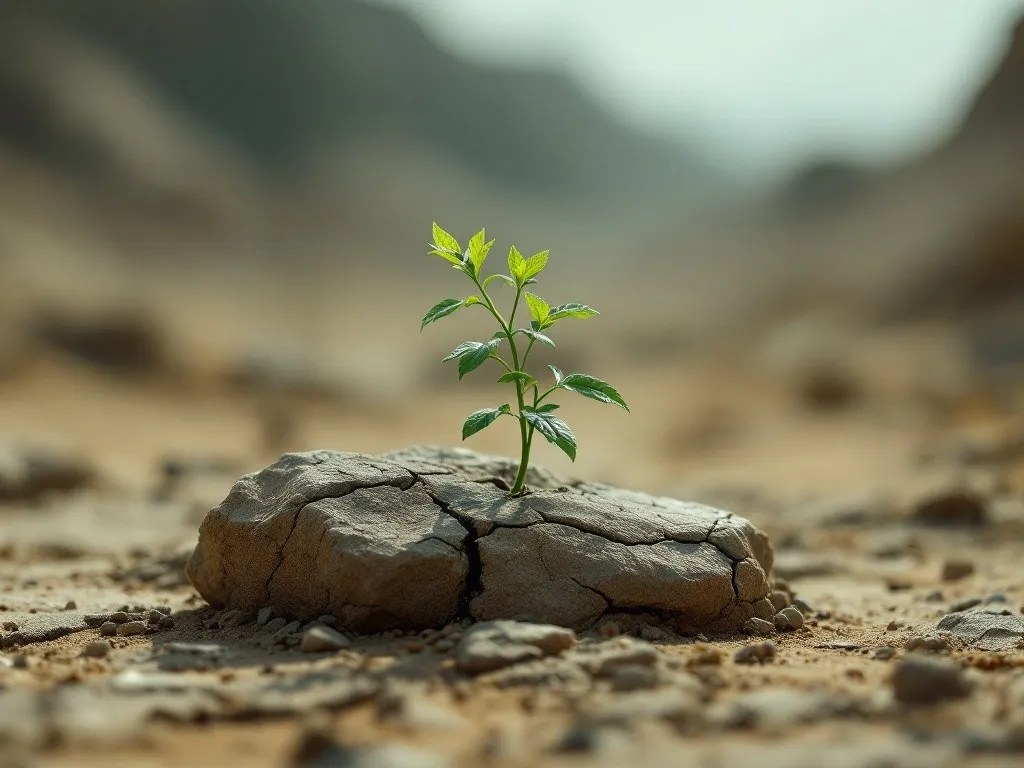
The ramp comes up and seals and takes it from me. In the warm dark Zariel sleeps with the rabbit under her chin, and I think of the tomato she said tasted like sunshine. I hold the place where the stalk stood behind my eyes until the hum of the engines takes me under, and I go without a fight.
Fin