
Part I
Then
In feral flight, we became animals.
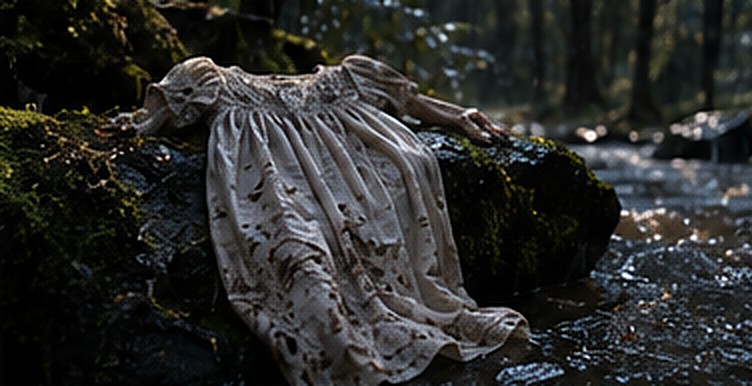
The storm had taken the path and left mud in the shape of a path, and we went down it on all fours where we had to, Salina ahead of me and then behind me and then ahead again, her nightgown a gray rag pasted to the back of her, my own soaked through and heavy as a pelt. Roots caught our feet. Branches took skin off our arms and gave it to the dark. Somewhere back in the house our mother had said the one word she had left to give us, and it was my name, and she had said it as you set down a thing you cannot carry any farther. Run, Evelyn. Then the wet sound that was our father, three rooms away and a lifetime off, and then the boots.
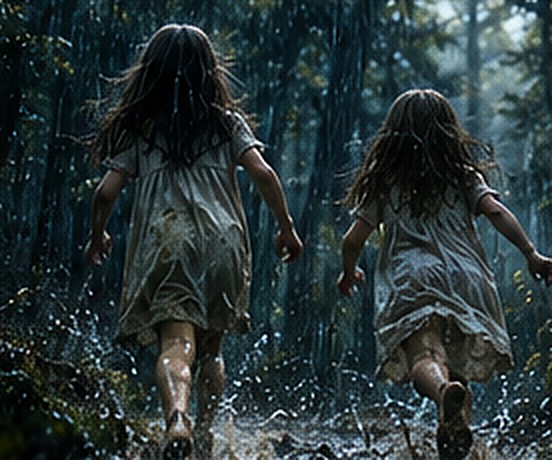
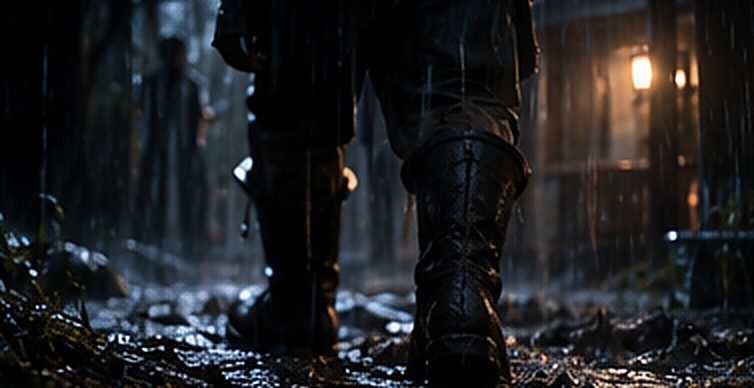
I heard the boots the whole way down to the water. They did not hurry. That was the part I have never been able to put down in all the years since, that a thing which means to have you does not need to run.
Salina went into the mud to her knees by the big leaning willow and I pulled her out by the arm and we went on, and her hand was in my hand, and her nails were in my palm, and I have the four white marks there still. The creek was not a creek that night. It had come up over its banks and taken the low ground and it moved the way heavy things move, without hurry and without mercy, black and swollen and loud. I thought if we could get across it we would live. I did not think past the far bank. There was no far bank in me at all, only the idea of one.
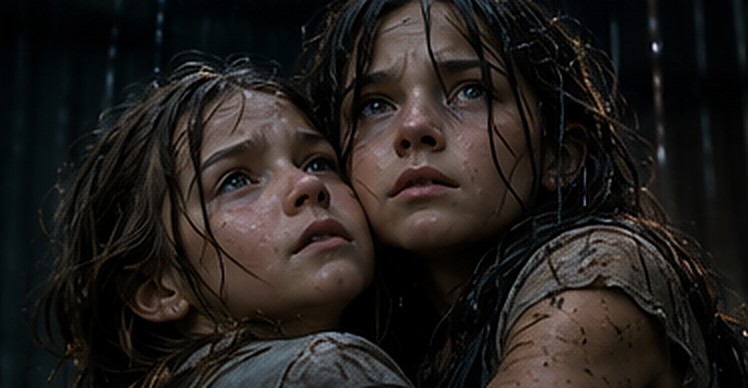
He caught me at the edge of the water. His hand closed on my shoulder and his breath came down on the side of my face, and it smelled of meat and tin, and he said something I did not hear because my own blood was too loud in my ears, and I did the only thing a cornered animal knows how to do. I twisted, and I bit, and I tore, and the mud under us gave all at once and I came out of my own skin of fear and out of his hand both, and I went down the bank and into the black water, and the cold of it stopped my heart for one whole second and then started it again, harder.
Salina was still on the bank.
I want that part plain, because I spent twenty-five years making it anything but plain. She was on the bank, above me, with the man, and she reached down, and her hand came out into the rain over the moving water, small and open, and she said my name. She was never loud, my sister, and she did not cry it even then, she only said Evie as you say a thing you are sure of, because in all her short life she had said it and I had always come.
The water had me by then and I let it.
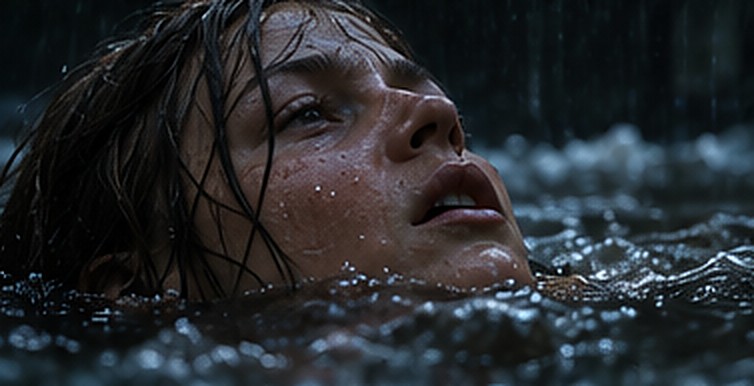
That is the truth the mud kept for a quarter century while I built a life on top of the lie. I did not fight the current to reach her. I did not climb the bank. I let the black water carry me down and around the bend and out of the reach of his hand and her voice both, and I told myself for the rest of my life that there had been no choosing in it, that the river took me, that a child of ten cannot be asked to do what I did not do. I believed it because I had to believe it. It got me through school and through my degrees and through the lectures and the books with my name on the spine. It got me most of the way to forty.
It did not get me past the morning they brought her up out of the creek hollow.
Now
They have clean words for it now. Trauma, they say, lodges in the nervous system, scores itself into the tissue, lays down a track the body runs whether the mind consents or not. We call it post-traumatic stress, we call it dissociation, we call it the compartment where a thing is kept so the rest of the house can be lived in. I have said all of those words to rooms full of people who paid to hear them, and I meant them, and they are true, and they are also a way of not saying the older word.
The older word is haunting.
I am a haunted woman. I was a haunted woman before I had the vocabulary to dress it up, and I will be one after the vocabulary fails, which it had, by the morning the sheriff of a county I had not set foot in since I was ten called the department secretary and asked for Dr. Daccardi, and the secretary, who was kind and thought she was doing me a kindness, put him through.
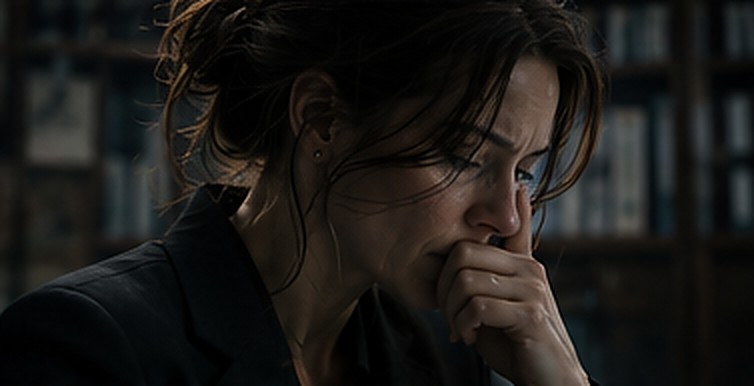
They had found my sister. The creek had moved, the way water moves ground over the slow years, and it had opened the hollow under the roots where the mud had sealed her, and a man walking a dog had seen what a man walking a dog is never meant to see. They had her dental records from a file older than most of the deputies. They were sure. The sheriff was sorry. He used the word closure, which is a word people use when they have run out of the true ones, and I thanked him in a voice that belonged to the professor and not to the girl, and I hung up the phone, and I sat in my office with its diplomas and its awards and its view of the quad, and I understood that the lie had held the door shut for twenty-five years and that the door was off its hinges now and something was coming through.
I will not set down here what I did that night. There are people who read a thing like this and go looking for the how of it, and I was a clinician too long to hand it to them. I will say only that I had decided to stop, and that I went about it with the lights off, with the dull purpose of a thing long resolved on, and that I meant to be found. That is the part the kind nurses never understood, the ones who lectured me and wrote their observations in the chart. I had been screaming without sound since I was ten years old, and I had finally found a way to make the scream loud enough that someone would have to hear it, and the irony, which I have had long nights to turn over, is that the only one who heard it was a man I had not yet met, who was listening for exactly that sound, in rooms like mine, across a whole wounded country, a man who read the water by the single ring that spread wrong.
I woke in the intensive ward with a tube down my throat and a light overhead that I hated with a purity I had not felt about anything in years. There were whispers outside my door. Hold, they said. Seventy-two hours. Supervision. I knew the protocol because I had helped write a version of it. I knew that a psychologist in my condition does not simply get to go home, that there are forms, and a committee, and a locked ward with soft furniture where they would watch me as I had spent my career watching other people, from the far side of a clipboard.
So I did the thing I was good at. When the sedation thinned enough to let me think, I talked. I gave them the eye contact and the flat affect and the small rueful admissions in the right order, I quoted my own field back to the residents until they relaxed, and by the second day they had moved me out of the ward and into a private room with framed photographs of aspen trees, where I was meant to decompress. I had charmed my way off the hold. I had always been able to charm my way out of a room.
I lay in the quiet with the aspens and understood that it had not worked. That I had opened the door and the thing had come through and no amount of professional composure was going to get it back behind the plaster. I could hear her. Not in any way I would have let a patient tell me about without reaching for the referral pad. I could hear Salina on the bank, saying Evie, over moving water, with her hand out, and I could not make it stop, and the question under the sound was the one that had been festering sealed for twenty-five years and was open now and rotten with air.
Could I have reached her.
The real question this time, with the old lie about the river stripped off it and my own hand left bare in the middle of it. If I had turned, if I had fought the water for the two strokes it would have cost me, if I had climbed the clay with her hand in mine instead of without it, would she have lived. Did she go down quick or did she go down slow, cold and alone in the dark under the roots, waiting for the sister who did not come. I had spent a career teaching people that the unanswerable questions are the ones that eat you, that you make peace not by answering them but by laying them down. I had never laid mine down. I had sealed it in mud and built a woman on top of it, and now the mud was open, and I wanted, with a want that frightened the clinician in me badly, to know. Even if the knowing finished what I had started.
That is the woman Dr. Mabry walked in on, on the third day. I understand now that he had been waiting for exactly her.
Part II
He did not look like rescue. He looked like a man who had taken a wrong turn on the way to somewhere more important and would correct it the moment he worked out where he was. He was young, younger than me by a decade at least, though there was already an early gray salted through the dark hair at his temples that he wore the way other men wear a good coat, as a thing that gave him weight he had not yet earned by years. The face was lean and a little austere, the cheekbones high, the eyes so pale a gray they looked at first like a defect, like something had been left out of them, until they found mine and stayed, and then they were the most present thing in the room.
"Dr. Daccardi." He said my name as though he had read it somewhere and found it correct. "My name is Mabry. I am sorry to come to you unannounced. Time is not a thing I have much of to spend, and neither, I think, do you."
A doctor who comes to see a colleague fresh off a locked ward will dress the reason up. The incident. The episode. The event. I had heard every soft word there was in two days of soft words. He used none of them.
"You tried to stop," he said. "The attempt did not take. Now you are deciding whether to try again, or whether to go back to the life that brought you here, which you already know will not hold you. You are between those two doors, and you have been between them since they pulled the tube out of you, and no one in this building has said so to your face because they are frightened of you, because you are one of them and you went over the edge they all live beside, and that frightens a clinician more than any patient ever could."
I should have had him removed. I had the call button under my thumb. Instead I lay there with my throat still raw and let a stranger read me out loud, and the reason I let him was the oldest reason there is. He was the first person since the sheriff who had not been frightened. He looked at the edge I had gone over as if he knew its exact depth and had measured it himself.
"Who told you about me," I said. "That is confidential."
"Very little about a crisis is confidential. There are the people who stabilized you on the floor of your own house, and the people caring for you now, and the people those people talk to over coffee, and word travels in our profession the way cold travels through a wall, by every crack at once." He drew the single chair in the room to my bedside with the toe of one shoe and sat, unhurried, and folded his hands. "I did not come because I heard a sad story. Sad stories are common. I came because of what you are. A woman who has spent her whole working life repairing the exact wound she has refused for twenty-five years to let anyone touch in her. You are the only person I have ever heard of who is both the surgeon and the thing on the table. That is rare enough to drive across three states for."
"You make me sound like a specimen."
"I make you sound like a colleague," he said, "which is what you are, and the only reason I am telling you any of this. A patient I would have to manage. You I can simply tell the truth, and let your own mind do the work mine would otherwise have to."
He took his glasses off then, a thin wire pair I had not registered him wearing, and cleaned them on the sleeve of his coat, slowly, both lenses, holding them up to the hard overhead light to check the work before he put them back on. I came to know that gesture better than I know most people's faces. It was the thing his hands did while the rest of him decided how much to say.
"You believe your memory of that night is whole," he said. "It is not. You have a version of it you have told so many times it has worn smooth, and under the smooth version there is a rougher one you have not looked at since you were ten, and under that there is the night itself, which no one has looked at, because the night itself is not stored where you have been looking. I can take you to it."
"That is not how memory works," I said. "Memory is not a film in a vault. It is reconstructed every time it is called, and the reconstruction changes it. There is no untouched original to go back to. I teach this."
"You teach the best current account of it," he said, "and the best current account is incomplete, as every best current account in the history of your field has been, right up until the morning it was replaced. I am not going to argue the theory with you. I am going to tell you what I can do, and you are free to call it impossible, and then I am going to do it, and you will revise your teaching or you will not, as you please." He said it without heat, in the voice another man would use to read the time. "The mind is a house. You live in a few of its rooms. The others you have shut, and some you have forgotten you shut, and in the shut rooms there are people, held there whole, the people themselves and not some picture of them, kept in the only place they still exist, in the pattern your mind made of them while they lived. I have found the way into the shut rooms. I can walk you back into yours."
My scientific training stood up in me and objected, loudly, with citations. Something older than my training sat very still and listened.
"You are describing a séance," I said, "in a lab coat."
For the first time something moved behind the pale eyes that might, in a warmer man, have been amusement. "Every séance that ever worked," he said, "was a technology its own age did not have the words for. I have the words. I also have the room, and the chair, and eleven people before you who sat in it and came out able to stand in a doorway they had not been able to go near for most of their lives." He stood, and the audience was over, I understood, not because he had run out of things to say but because he had decided I had enough to turn over. "I am at a research house some hours from here. When you are ready to see rather than argue, send word, and I will come for you myself." He paused at the door. "You want to know whether you could have reached her. I cannot promise you the answer will be kind. I can promise you it is still in the house, and that you are the only one who can be taken to the room it is in. No one should have to live beside a shut door for twenty-five years and never be told what is behind it. That is all I believe, Dr. Daccardi, stripped of everything that would take longer to say."
He was gone before I understood that he had told me none of it, not the name of the house, nor what was done there, nor who the eleven were, nor where they had gone after. He had told me only the single thing he knew would carry me across the state line to find out.
It carried me across the state line to find out.
The drive was most of a day. He came for me himself, as he had said he would, in a plain gray car that smelled of bay rum and solvent, and once we were out of the city and into the folded country to the west he said almost nothing, and I was glad of it. The leaves were down off the hills and going to rot on the road, and the sky held the flat gray it holds before the first hard cold, and the farther we went the fewer other cars there were, and then there were none, and then there was only the road and the bare hills and a man driving who had not told me his first name.
I had left no note of where I was going. I want that recorded, because it is the thing I return to. A woman who had built a life on being the careful one, the one who read the fine print, the one who warned her patients about exactly this, got into a stranger's car on the strength of a single accurate sentence about her own grief and let him drive her past the edge of the map. The part of me that was still a clinician knew what that meant, knew the word for a person who does that, and I smothered it, because the alternative to trusting him was to go back to the room with the aspens and the open door, and I would rather have died than go back to that room, which was, after all, how I had come to be in the car in the first place.
Vísindi Labs sat at the end of a private road behind a wall and a gate, in a cut of the hills where the trees came down close on both sides and the light went early. The name was on a brass plate gone green at the screws, VÍSINDI, nothing more, and I asked him what it meant and he said it was a family name and left it there. The house itself was old, far older than any research could have made it, three stories of dark stone with narrow windows, the kind of place built in a hard century by people who expected the century to stay hard. It had been a sanatorium once, he told me as we climbed the worn steps, in the years when such places were nearer to prisons than to hospitals, and his family had bought it for the quiet and the stone and the distance from anyone who would ask what the quiet was for. Above the door, three words stood cut into a lintel older than the republic. Through Deepest Reflection, Wisest Direction.
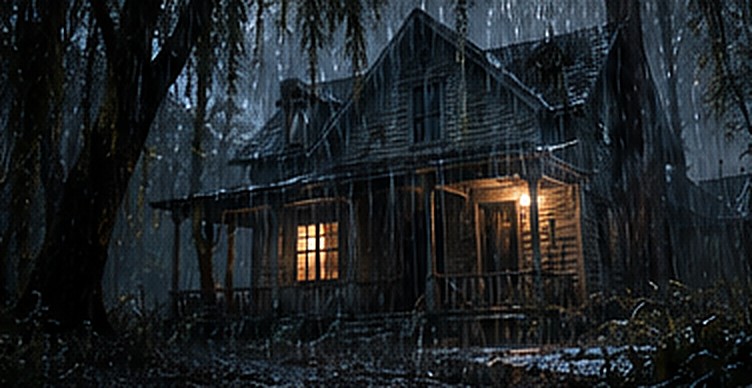
"A previous owner's motto," he said, when he saw me reading it. "I have never had the heart to take it down. It is wrong in every particular, and I like to be reminded of that each time I go in."
Inside it was candle-dim and cold and smelled of old stone and older dust, and our footsteps came back at us off a high dark ceiling, and the portraits of the sanatorium's dead directors watched us down a corridor that got older and plainer as we went, the good wood giving over to plaster and the plaster to bare beam, some of it black from a fire a century gone that no one had ever cleaned. He saw me looking.
"It is a theatrical setting for the work," he said. "I am aware of it. People expect the extraordinary to live in a cathedral and not in a basement, and it is easier to give them the cathedral than to argue them out of needing it. The work itself happens below."
Below was a different century. A steel door with a scanner that read his eye and sighed open on hydraulics, and behind it a long low room of cold light and clean glass, nothing old in it anywhere, banks of instruments and tall racks that breathed out the faint sweet reek of coolant, and screens along one wall running columns of figures too fast to read and, under the figures, slow forms that turned and folded and turned, that I did not have a name for and did not like. Young people in pale coats moved among the racks without hurry and without talk. None of them looked at me. I would understand later why none of them looked at me, and I would have given a great deal, when it came, not to have understood it.
At the far end, behind a drawn curtain, in a small room screened all around in fine copper mesh, stood the chair.
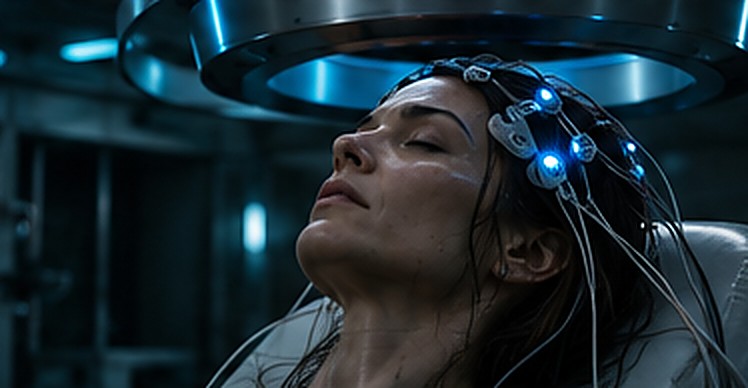
It was not much to look at, which was the first thing that frightened me about it. I had braced for an engine. It was a plain reclining seat with a crown of fine cabling above the headrest and a bundle of leads running from it into the racks, and it sat in the center of the copper cage, a single tooth in an opened jaw, and I did not want to go near it, and he watched me not want to with the patience of a man who had watched eleven people not want to before me.
"Tell me what you feel," he said.
"Fear," I said, because I was too tired to be anything but exact. "And that I have handed myself to a man I know nothing about, in a place no one knows I have come to, on the word of a stranger. You speak of healing. A machine that can walk into a mind and open its shut rooms can do a great many things that are not healing, in a great many hands, and I have only your word there is any care in yours."
He did not take offense. He took his glasses off and cleaned them, both lenses, against the light.
"Your judgment is intact," he said, as though noting a reflex. "Good. I would not want to do this with someone whose judgment was gone. Look at me, then, and tell me what you believe I want."
I looked. The pale eyes gave back almost nothing, and under the almost-nothing there was a single thing burning so steadily and so far down that it did not flicker, and I have spent a long time since trying to name it, and the nearest I have come is this. He wanted to keep things. A light held lit in a window against the dark is the nearest I can put it, held there against the one unarguable fact that everything the window shows will go out. He wanted to keep the dead from being dead. I did not know yet that he had already suffered the loss that makes a man want that, long before there was any machine to want it with, or that I was about to become the first thing he kept past the point where keeping was a kindness.
"I believe you want to help me find peace," I said, because it was the part of the truth I could bear to say to his face. "Beyond that I cannot read you."
"Beyond that," he said, "I would not ask you to," and he drew the chair's crown up on its arm and turned it toward me, and the leads swung and settled, and he said, "Sit down, please. You are making me nervous," and the small ordinary joke of it, the first human thing he had said all day, did what an hour of argument could not have done. I sat down.
He fitted the crown to my head with hands that were very cold and very sure, and he talked while he worked, low and even, as you talk to a horse, and I did not follow the half of it and I understood later I was not meant to, that the words were a hand on the neck and not an explanation. Then he stepped back, and his thumb moved on a dial I could not see, and the cold room went out of the world all at once, a stone going under water, and I was standing in my grandmother's living room with the floral paper peeling at the seam behind the lime-green couch that no one ever sat on, in the gray afternoon light of a house twenty-five years gone, and the air was full of the smell of her thin cigarettes, and it was so complete, so exactly and unbearably itself down to the water ring on the side table where a glass had stood every evening of a dead woman's life, that I put my hand over my mouth and made a sound I had not made since I was a child.
"Extraordinary," I whispered.
He was there, in my grandmother's house, sitting in my father's old chair by the dead electric fire with his hands folded, watching me with those pale eyes, at home in my memory as if he had always lived there.
"Indeed," he said. "Now. Shall we begin."
Part III
We did not go to the night at first. He was too careful for that, and I understand now that the care was real and was also a method, that a thing which is true can also be a door held open for you to walk through in the direction the other person wants you to go.
We went to the ordinary years instead. For what he told me were weeks, though I had no way to count them from inside, he walked me back through the decade before the storm, and the chair found in me rooms I had shut so long ago I had forgotten the house had them. I do not know how it did what it did. He never told me and I stopped asking. I would say a thing, a half thing, the corner of a thing, and the room would build itself around the corner, and then I would be in it, whole, with the light right and the smell right and the small wrong details right, the chip in the bathroom sink, the screen door that never quite latched, the exact weight of my mother's hand on the back of my neck steering me into church.
And Salina was in the rooms.
She was six and she was eight and she was nine, she was all the ages she got to be, and she was exactly herself, which I had not been able to call up clean in twenty-five years and which came back to me now so complete that it broke something in me every single time. She had a gap where a front tooth had come out and the new one was slow, and she worried the gap with her tongue when she was thinking, and she hummed without knowing she was doing it, a tuneless little run of four or five notes she had made up and did not remember making up, and she would not sleep unless the closet door was all the way shut, not cracked, all the way, and if you cracked it to tease her she would get out of bed in the dark and shut it and get back in without a word, with enormous dignity, as though she were the adult and the dark were a thing one simply dealt with. I had forgotten the closet door. I had forgotten the hum. A man I did not trust gave them back to me in a basement at the end of a private road, and I wept on the floor of a kitchen that did not exist for a sister who had been bones in a creek hollow for a quarter century, and I would not have traded those weeks for my own life. That is the hook he set. He set it with the truth. There is no defending yourself against a man who hurts you with things that actually happened.
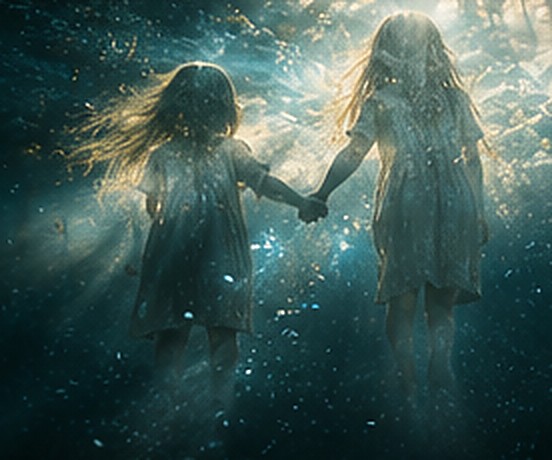
My aunt came too. Lydia, my mother's older sister, who had kept us the one summer our parents went east and who smelled of the lemon drops she bought by the bag, and she sat with me on a porch that had rotted to nothing decades before and told me I was a good girl and a strong one and that the thing ahead of me could be borne. I asked him once how she could tell me things, how she could answer me, when she was only my memory of her, and I did not know what she would say to the woman I had become. He did not answer for a moment.
"She is built from more than you remember," he said. "The pattern is richer than the recollection. A person who knew someone well carries more of them than they can call up on purpose. I am only reading all of what you carry, rather than the part you can reach." He paused, and cleaned his glasses, and I had learned by then that the pause and the glasses meant he was choosing which true thing to say. "She will say what Lydia would have said. That is not nothing. It is, in fact, most of what any of us ever had of each other even while they lived."
I should have heard it then. He had told me, plainly, in the flat voice he used for the hour of the day, that he could build a dead woman out of the pattern a living one had left, and that the built woman would do what the dead one would have done, and that this was, to him, no different in kind from ordinary love. I heard it as comfort. I was starving and he was feeding me and you do not interrogate the hand that feeds you when you are that far down.
It was Salina on the swing set that undid the last of my caution. She came to me in the backyard under the willow where we had buried a bird in a shoebox the spring before the storm, and she was nine, and she was humming the four notes, and she put her hand in mine, and her hand was warm, and her nails were short and bitten because she bit them when I was not watching, and I held my sister's warm bitten-nailed hand in a world I knew was not the world and I thought, with all my ruined heart, that I did not care if it was real. I would live here. I would sit on this swing set in this false yard with this built child until the man in the basement unplugged me, and I would call it enough.
"She gives you strength for what is ahead," he said, behind me, when she had faded as they all faded, gone thin and then gone, like breath off glass. "Hold onto it. You are going to need all of it."
I grew greedy. That is the plain word for it, and I set it down against myself. A woman starved for twenty-five years does not sip when the table is finally spread. I asked him for days.
"Not a sad one," I said. "An ordinary one. The most ordinary day you can find in me. I want to see what we were when nothing was happening to us."
He found me the morning we buried the bird.
I had forgotten the bird entirely. He gave it back to me from six words I had let fall in some earlier session, and the giving was total. It was April, the April before the last one, and the willow in the yard had come into its first green, and Salina had found a sparrow dead at the foot of it, dead of nothing either of us could find, no mark, no broken wing, only a small gray weight gone out of the world in the night. She was eight. She would not be told it was only a bird. She made me fetch a shoebox and a square of the flannel off the rag pile, and she laid the sparrow in it with a seriousness that dared me to laugh, and she dug the hole herself in the soft ground under the tree with a soup spoon because I would not give her the trowel, and she made me say words over it. I did not remember the words. They came up out of the machine regardless, and I stood in the April sun that did not exist and heard my own child voice say them, awkward and rushing, and heard her correct me, because I had left out the part about the bird going somewhere, and she would not have a funeral that did not send the thing somewhere.

"You have to say it goes over," she told me, with the dirt black under her bitten nails and the gap in her teeth catching the light when she spoke. "You cannot just put it in the ground. You have to say where it goes after."
"Where does it go after," I asked her, and I was forty years old asking it, and I was ten years old asking it, both, in the warm false grass.
"Over," she said, as though I were slow. "The birds go over. Everybody knows that. They cross over to the other side and that is where the dead ones are and the live ones go and visit and come back. That is why they are always up there. They are going back and forth." She tamped the little grave flat with the back of the spoon. "This one just gets to stay over now. It does not have to come back and be a bird anymore if it does not want to."
I had forgotten that she believed that. I had forgotten that she had believed anything, that she had been a whole person with a cosmology of her own worked out from scraps, birds and the dark and the far side of things, and that she had explained it to me with the flat certainty of a child who has never been contradicted by death. I knelt in the grass that was not grass and I could not breathe for love of her, and I understood, distantly, in the part of me that had once had a profession, that this was the deepest hook he had set yet, and I did not care, I would have stayed in that April until the sun burned out.
That was the session the first wrongness came.
I asked her a thing. It was a small thing and I asked it on purpose, some sideways adult question about whether she was afraid, the kind of question I had asked a thousand frightened children across a desk, and it was a question the morning we buried the bird had never contained, because the morning we buried the bird I had been a child myself and had not known to ask it. And she stopped.
What happened was worse than freezing. For a half second, no longer, the light went on catching in the gap of her teeth and her chest went on with its small breathing and her hand went on tamping the grave, and there was no one behind any of it. The hum did not stop so much as repeat, the same four notes laid down again in the exact same places, a groove skipping, and her eyes, which had been on the little grave, were on the little grave in precisely the position they had held a moment before, down to the angle, and I had the sudden cold sense of a room with the furniture all correct and the people taken out. Then it passed. She looked up and smiled with the gap in her teeth and said something that belonged to the morning, and she was herself again, entirely, and the April went on.
I told myself it was the system straining at a question outside the record. I told myself, in the professional voice, that I had asked for something the memory did not hold and the construct had reached for it and come up with nothing and recovered. All of that was true. It is the thing about him that I keep having to say, that everything he gave me to believe was true. But under the true thing there was a colder one, and the clinician felt it and smothered it, because to hold onto it would have meant getting up out of the April and walking away from my sister a second time, and I was not going to do that. I put my hand back in the grass beside her small one and I let the wrongness go.
Through the copper mesh, at the edge of the April, a figure in a pale coat crossed once, left to right, unhurried, and did not look in, and I did not think about it, and I should have thought about it, because I would learn later that there was a great deal in that house that crossed left to right, unhurried, and never looked in, and did the same crossing again an hour later with the identical roll of the shoulders, over and over, all day, forever, people who were not people, set moving among the real machines so that the work would look like the work of many hands. He had built a whole staff out of the pattern of a staff. He had built my sister out of the pattern of my sister. I sat in the grass between the two kinds of building and could not yet tell that they were the same kind, and he watched me not be able to tell, from my father's chair, with his cold hands folded, and he was patient, because patience was the thing he had the most of, patience and the one burning thing far down that did not flicker.
The nights, between the sessions, I spent in a narrow room upstairs in the old stone house, and I did not sleep so much as surface and sink, and I woke each time with my face wet and the sheets twisted and the four notes of her hum in my head and the smell of lemon drops that was not there. I understood even then, in the part of me that was still a clinician and would not quite die, that a treatment which left the patient weeping and sleepless and longing to stay inside the construct was not a treatment at all by any standard I had ever been taught or taught to anyone. I wrote none of that down. There was no one to write it to. I smothered it, as I had smothered everything else, and I went back down to the chair.
Then he took me to the night.
He did not warn me beyond a raised hand, a gesture I had learned meant the floor was about to go out from under the world, and the grandmother's house folded up and went black and reopened as the storm. The real storm, or the chair's storm, I could no longer tell the difference and he had made sure I could not. My child self stood in the dark trees in the soaked nightgown with the rain coming down like the sky had broken, and I was both the child in the wet cold and the woman watching her, and he was beside the woman, his cold hand on my shoulder.
"Be brave," he said. "I am here. Whatever you see, I am here, and I will not let you drown in it."
The house burned behind us through the trees, which was a thing I had carried all my life and never spoken, that they had set the house alight, that the last I ever saw of the only home I had was the orange of it through black branches. The gunshots came. I heard my father go down and then the wet sound again, closer now, and I heard my mother say my name, Run, Evelyn, and set me down like a thing she could no longer carry. And the woman I was broke, and begged him, there in the roaring dark, to stop it, to pull me back, that I could not do this, that I would come apart.
"You are already apart," he said, and his voice had changed, had gone from the hand on the neck to something level and relentless and far away. "You have been apart since you were ten. I am not breaking you. I am showing you the break, which is the only thing that has ever been done to you that you did not choose. Go forward. Face it, so that it can stop being the thing you cannot face."
And so I went forward, into the water, into the moment I had sealed in mud and built a life on top of, and the chair would not let me look away, and the truth came up out of the black water as she had never come up out of it, whole and terrible and mine.
I saw my own hand not reach.
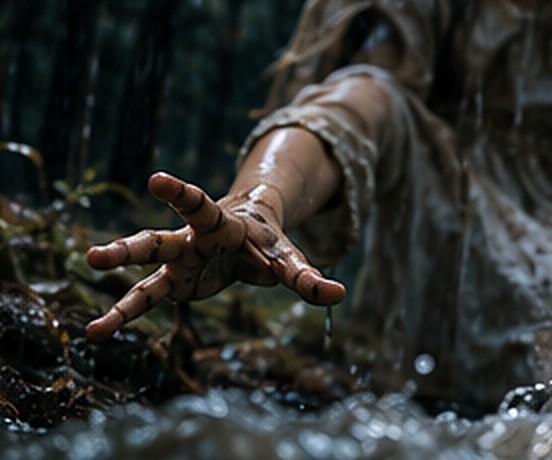
I saw her on the bank with her hand out over the current, saying Evie, sure of me as she had been sure of me all her life, and I saw the water take me, and I saw that I let it, that there had been a moment, one moment, no longer than it takes to say her name, in which I could have turned and fought the two strokes back to the clay and taken her hand, and that in that moment the animal in me had chosen the animal's choice, which is to live, and had let my sister's hand close on nothing in the rain. No stranger's grip held me back. No river too strong to fight. Just a ten-year-old girl who wanted to live more than she wanted her sister to, for one moment, which was the only moment there was going to be.
I had made it a murder done by someone else because a murder done by someone else is survivable. I had made it a thing the river did. The chair took the lies away one at a time, each a layer of old paint lifted off, and under all of them was the small plain unbearable fact, and I knelt in the mud of a storm that was and was not real and said it out loud for the first time in my life.
"I let go of her. I could have reached her and I let go and I ran."
He let me stay in it. That is the part I want set down exactly, because it is the truth of what he was, under the pale eyes and the careful voice and the real tenderness that was also real. He did not pull me out when I had said it. He held me in the cold mud with my sister's unreached hand in the air above the black water, and he let the full weight of twenty-five years of it come down on me at once, and when I begged him for the dark, for the oblivion I had tried to take myself to in a room with the lights off, he denied me even that.
Then he said, "Again."
I said it again. I knelt in the mud and said the sentence again, and the rain came down on the same leaves in the same places, and her hand went out over the current in the same arc, and I said it, and he said, "Again," in exactly the tone he had used the first time, a man asking a colleague to repeat a figure he had not caught.
Fourteen times. I know the number because the number was written down. Months later, in a place I had no business standing, I saw a row of fourteen marks in his hand along the edge of a card, and beside them, in the same hand, the word clean, circled once. That circle is the only thing I brought out of that house that I have never been able to put down. I have wanted, for years, to call it punishment, because punishment is a thing you can hate a man for and be finished with him. He was taking it until he had it right. Fourteen passes to get one that was usable, because the first thirteen had too much of my screaming in them and the fourteenth had the sentence by itself, level, with nothing on it, and a thing with screaming in it cannot be filed.
I do not know what my body was doing through any of this. I know a little, because I woke in different clothes. Someone had washed me. There is a tenderness in that which I have never found the bottom of, that while I was in the mud for the fourteenth time a man with cold hands was keeping my wrists from tearing on the straps, and that afterward he or something he had built had cleaned me and dressed me and put me in a bed with a glass of water set where my hand would find it, and had left the lamp burning low, because he had read in my file that I did not do well in the dark.
"Not yet," he said. "The pain is not the injury. The pain is the injury being set. Stay in it. Dawn is on the other side of this, and the only road to the dawn goes through the middle of the night, and I will walk every step of it beside you, but I will not carry you past the step that matters. Stay."
And at the very bottom of it, when I had nothing left to defend myself with, when the guilt had burned down everything I had built to keep it off me, he came to me in the mud, and he took me in his arms, and he held the child and the woman both while the storm went out around us, and I believed, God help me, that I had been saved. That the shut door was open and the thing behind it faced at last and that this strange cold man had done for me what I had spent a career failing to do for the people who trusted me. I believed the circle was closed.
I did not know yet what the opening had been for. He had opened me to see whether I could be opened. The night was the proof of concept, and I was the concept, and the proof had come back exactly as he had hoped.
The unease came later, in the ordinary way such things come, not as a revelation but as a cold draft under a door I had thought was shut. We had surfaced back into the copper-caged room, and I was shaking and spent and emptied out in a way that felt, for a few hours, like the lightness after a long fever breaks. And then I was thinking again, which is the one thing he had not managed to take from me, and the clinician who would not die sat up in me and counted the violations.
He had taken a traumatized patient to the floor of her worst memory and held her there against her stated refusal. He had used a dead child, rebuilt from the patient's own grief, as a lever to move her where he wanted her moved. He had run every one of these procedures on a mind he knew to be freshly suicidal, in a facility no one knew the location of, with no second clinician in the room, no oversight I had ever seen, no consent that would survive one minute of a review I had sat on a hundred times. Every tenet I had been taught and had taught, every guardrail the field had built out of a century of its own disasters, he had stepped over with a confidence so total it had not even registered to him as stepping over anything.
I said some of this to him, carefully, the next time he moved to fit the crown to my head. I chose the professional words. I spoke of risk, and of false memory, of the known dangers of inducing dissociation under exactly these conditions, of my concern not even for myself but for the ones who would come after me into that chair.
Something went out of his face while I talked. What came into it was worse than anger and quieter, a patient disappointment, the look a man gives a tool that has begun to argue with the hand.
"You are frightened," he said, "and you are dressing the fear as ethics, which is a thing clever people do, and I will not insult you by pretending otherwise. Listen to me. I know exactly which lines I have crossed. I crossed them on purpose and I would cross them again, because the lines were drawn by a profession that decided, a long time ago, that it was better to leave a wound sealed and poisoning a person for fifty years than to risk the pain of opening it. Your field calls that caution. I call it the largest and best-dressed act of cowardice in the history of medicine, and I have watched it put more people in the ground than any disease. You yourself are its casualty. You spent twenty-five years being treated by the best your field had, and the best your field had left you on a bathroom floor. I took you to the thing in six weeks. Do not quote the guardrails to me. The guardrails are what you hit on the way down."
"Even granting all of that," I said, and my voice was steadier than I was, "a thing can be true and still be dangerous in one man's hands. You have decided, alone, what may be broken and what may not. There is no one here who can tell you no. I have never in my life been in a room where there was no one who could tell the man in charge no, and I have read enough history to know what happens in those rooms."
For a moment, one moment, I thought I had reached him. He said nothing, and he cleaned his glasses, and when he looked up the pale eyes had something in them that was almost grief.
"No," he said softly. "You have not. There is no one here who can tell me no. You are right about that, and you are right to be afraid of it, and I am going to do it anyway, because the alternative is to leave you as the careful men left you, and I find I cannot." He drew the crown down. "Your reservations are the last of the old Evelyn talking. She will not survive this house, and she should not. I am sorry. In another age I think you and I might have built this together, as equals, and I would have liked that. But we are not in another age. Lie back."
I did not lie back. I came up out of the chair instead, faster than he expected, because he had spent six weeks learning the shape of my grief and had not spent one minute learning the shape of my fear, and fear is faster. I got the leads off my temples with both hands and I ran for the steel door, and it was open, because he had never needed to lock me in, and I understood the insult of that as I went through it, that he had not locked the door because it had not occurred to him that the thing on the table might simply get up and leave.
The pale coats did not stop me. They did not even turn. I shoved past two of them at the foot of the stairs and my hands went through where their arms should have been, and I felt nothing, no cloth, no warmth, no body, and I understood all at once and far too late why none of them had ever looked at me, why none of them had ever spoken to me or to each other, why the lab had the particular silence of a photograph. There was no one else in the house. There had never been anyone else in the house. He had built the pale coats as he had built my aunt and my sister, out of the pattern of a thing, and set them among the real racks to make the work look like the work of many careful hands, and I had been alone with him from the first day, alone at the end of a private road behind a wall and a gate, the whole time.
I went up the stairs into the old stone dark with that knowledge hammering in me, and the house lengthened as I climbed, corridors going on past doors I did not remember, the painted directors dark in their frames, and I told myself it was panic stretching the distance and I did not believe it, because by then I did not know which of the things around me he had made and which had always been there, and the not-knowing was a drowning of its own.
The same pale coat crossed the landing ahead of me. I knew it was the same one by a particular stoop to the left shoulder and the particular angle of a head bent over something it was never actually carrying, and it went left to right through a doorway, and I stood on the stairs with my heart going and waited, and a slow count later it crossed the landing again, the same stoop, the same bent head, out of one wall and into the next, the identical crossing, as though one second of one person had been cut loose and set to run forever in a loop of corridor. I said something to it. I do not remember what. I think I said help me, which was a thing I had not said out loud to anyone since I was ten years old. It did not turn. It reached the doorway and was gone and a slow count later it was back at the far end, stooping, bending, crossing, and I understood that it had never been going anywhere, that none of them ever had, that the house was full of single seconds set to run, and that I had spent six weeks taking comfort from the sense of busy careful hands all around my treatment, and that the hands had been one gesture, copied and lit and repeated, a crowd built out of a single borrowed moment so that the work would not look like one man alone in the dark with a woman in a chair.
I started trying doors. The clinician in me needed one piece of proof even as the animal screamed to run, and I could not stop her, she had run my whole life on proof. The first door gave onto my grandmother's living room. The lime-green couch, the peeling seam, the water ring where the glass had stood, the smell of the thin cigarettes, all of it, lit by a gray afternoon that had no window to let it in, and no one in it, waiting. It was a set now, struck and stored and kept ready against the chance it would be wanted again, and the sight of it standing empty was worse than anything the chair had shown me, because it told me plainly what I had been to him. One more room, built and kept built, swept and lit and ready, for after I was gone.
I shut it and opened the next, and the next was not mine. I want that set down, because it is the thing that finally made me run and not stop. The next room was a kitchen I had never stood in, small and yellow, a different country in the shape of its one window, a child's drawings held to a cold-box with magnets, a man's coat over the back of a chair, and in the air the smell of a stew that had been cooking in that room for no one. A woman stood at the counter with her back to me, her hands in a bowl, not moving, and she did not turn when the door opened, and I knew with a certainty that put ice all through me that she had been one of the eleven he named to me in the hospital, eleven people before you, and that this was a room out of the inside of one of them, kept as mine would be kept, that somewhere under this house there ran a corridor of other people's kitchens and porches and living rooms, lit and empty and waiting, a whole archive of the insides of the people he had opened, and that he did not throw anything away, that this was the thing he was, a man who could not let one room go dark.
I shut the door on the yellow kitchen and I did not open another.
The dead directors hung down the stairwell in their frames, a hospital that had been nearer a prison, and I could not tell anymore which of them he had hung and which were only paint, and it did not matter, because all of it was his house now, the real stone and the made people and the stored rooms, kept and lit and running. Somewhere below me, unhurried, I heard him on the stairs. He did not call out. He had the whole house, and all night. I understood on the stairs the thing I had understood at the edge of the creek when I was ten, that a thing which means to have you walks, and that the walking is itself the terror, and I went down past the watching paint and the looping coat and the shut doors with my own ruined breath loud in my ears, down toward the one cold draft in all that dead warm air, which had to be the outside, which had to be a door to the actual world.
I found the great door by the cold air that came under it. I hauled it open on its tired hinges and the gray outside light fell on me like water and I ran, past the green brass plate with the one dead name on it, down the private road under the bare trees with the first hard cold of the year in my lungs, and I did not look back, because I was ten years old again and running from a thing that does not need to hurry, and I knew it in the body, below any thought, that looking back is how it takes you.
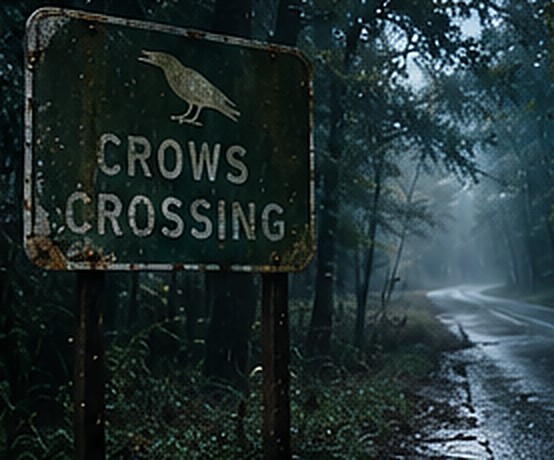
A rusted sign stood where the private road met a gravel county one, and I was past it before I read it, and I read it after, in my head, as you read the last card of a dream. It gave the name of the nothing I was leaving. There was a derelict bus shelter at the junction with a pay phone hanging crooked under the eave, and by some grace left over from an older world it still had a tone in it, and I fed it the coins from my coat and I called out into the gray afternoon for anyone at all, and a puzzled operator answered, and I wept at the sound of a voice that did not live inside my own ruin, and I told her where I thought I was and begged her to send someone, and she said she would, in the calm trained voice of a person who has decided the caller is not well, and I did not care, I would take not-well, not-well was a country I could live in.
Then headlights came down the gravel road through the pines, unhurried, and I knew the gray car before it slowed, and I sat down on the bench of the bus shelter because my legs had decided the running was over, and I watched him get out, and he came toward me across the buckled pavement without hurry and without anger, with his coat open and his hands empty, and he crouched down in front of me so that his pale eyes were level with mine, and he did not reach for me. He only looked, with that same terrible patient tenderness, a man looking at a lamp he has not yet decided whether he can relight.
"You should not have had to run," he said. "I am sorry that you felt you had to run."
Part IV
I asked him why. It was the only word I had left with any weight in it. Why, after all of it, after the mud and the hand that did not reach and the truth he had dragged up out of me by the roots. Why come after me down a gravel road in the cold. What more was there.
He crouched in front of me on the buckled pavement, and he did not answer like a man with a plan. He answered as someone does who has only ever had one true thing, and has given his life to it, and is tired.
"There are two things I have decided no one should have to suffer," he said. "I decided them a long time ago, over a person I could not save, and I have spent every day since making them true, one person at a time. The first is that no one should die with the people they love still locked away where they cannot reach them. You had that. A sister behind a door for twenty-five years. I opened the door. I did for you the thing I could not do for myself in time, and I would do it again, and I am not sorry for it, whatever it cost you, because the alternative was to leave you as I found you, and I have watched that alternative too many times." He paused, and the gray afternoon light lay flat on the lenses of his glasses so that for a moment I could not see his eyes at all. "The second is harder, and it is the one you ran from, and you were right to run, and running will not help you. No one should have to live with a wound that cannot heal. You cannot unknow what you know now. You let your sister's hand close on the rain. You will carry that every hour you are awake for the rest of your life, the same as you carried the lie, except that the truth is heavier than the lie and it will not wear smooth, because the truth does not wear smooth, it only sits there, true. I opened the door and behind it was a thing that will kill you slower than the thing you already tried. I know, because I have the same thing behind my own door, and no one will ever open mine, and I have made my peace with the knife of it. But you did not ask for yours to be opened. I opened it. So it is mine to close."
"You cannot close it," I said. "You of all people know you cannot. It is true. You said so. It will not wear smooth. There is no closing a thing like that."
"There is one way," he said, gently, and he took his glasses off, and he cleaned them, both lenses, slowly, against his sleeve, and he put them back on, and he looked at me, and in his face there was no madness at all, which frightened me worse than madness would have, only a terrible finished certainty, a man who had done the sum a hundred times and always got the same number. "I can take it out. The whole injury, lifted clear. The night, the water, the hand, these six weeks, the running, this road, all of it gone, so that you wake tomorrow a woman who was ill and is better, who had a bad few days she does not quite remember, who goes back to her work and her life and does it well, and is kind to the people she treats, and sleeps through the night, and does not in all her remaining years stand on a bathroom floor in the dark. You will not remember your sister. That is the price, and it is a true price, and I will not lie to you about it as the careful men lie. But you do not remember her now, not really, you remember a wound where she was. I can take the wound. You will be lighter than you have been since you were ten years old. You will be free."
I understood then that he had not come down the road to force me. He had come to ask me. That was the last cruelty, and I do not think he knew it was a cruelty, and that is the heart of what he was. He was going to make me choose it. He was going to make the woman who had let her sister go choose, freely, in the cold, with her own mouth, to let her go again, forever, and to call it mercy, and to thank him.
"And if I say no," I said.
"Then you keep the wound," he said, "and you go home with it, and I will drive you to a town with a bus, and you will never see me again, and I will not stop you, and I will think about you for the rest of my life, the one who said no." He said it plainly, and it was true, and that was the worst of it, that it was true. "I am not a man who takes. People believe I am, the ones who have guessed what I do out here, the ones who pay for it to go on. They are wrong about me. I only keep. And I only keep what is given to me to keep. So I am asking. Shall I take it, Evelyn, or shall I drive you to the bus."
I have gone over this moment more times than I have gone over any other in a life now spent mostly going over moments, and I want to set down what is true about it, which is that I do not know what I would have chosen. I would like to tell you I chose the wound. I would like to tell you I stood up off that bench and found some last clean strand of the old Evelyn and said, I will keep her, even broken, even if it kills me, because a sister is worth the wound, because a person is more than the pain of losing them and you do not throw a person away entire to be rid of the ache. I would like to tell you that.
But I was so tired. And he had spent six weeks teaching me that he could give me peace, and ten minutes teaching me that peace had a price, and the price was a girl I had already let go of once in the water, and some animal in me, the same one that had let the current take me at the edge of the creek, stirred in the cold and wanted, more than it wanted my sister, to live. To simply live. Lighter than I had been since I was ten.
I opened my mouth. I do not know, to this hour, which word was going to come out.
It does not matter which word was going to come out. That is the thing I have had to learn to hold, the thing that is worse than if he had simply held me down. He had already decided. He had decided before he got out of the car, before he came down the road, before he ever walked into my hospital room, and the asking was not an asking, it was the last gift he knew how to give, the appearance of a choice, so that I could believe, in whatever was left of me afterward, that I had wanted it. He watched my mouth shape the start of a word, and he nodded, once, as though I had already answered, as though the answer were a formality he had waited for out of courtesy, and he reached out with one cold hand and he touched the side of my face, almost tenderly, as you touch a thing you are saying goodbye to, and with the other hand he did something at my neck that I did not see and barely felt, and the cold afternoon folded up and went black, and I did not finish the word.
I was in the chair again. I knew the copper around me without opening my eyes, the particular quality of the quiet, the sweet coolant reek. He was fitting the crown. His hands were very cold and very sure. He was talking, low and even, the hand on the neck, and this time I heard all of it, because this time he was not talking to steady me, he was keeping a record, out loud, as a man talks to himself at the end of a long work when there is no one else to say it to.
"I want it known that she was not harmed," he said, to the empty room, to the racks, to the pale coats that were not there. "I want it in the account, wherever the account is kept. She was not harmed. She came to me broken and I am sending her back whole, and if whole is not the word, if there is a better word for a vessel emptied of what was poisoning it, then let a better word be found and set down in place of this one, but the thing itself is not cruelty, the thing itself is the opposite of cruelty, and I will not have it called cruelty by people who left her on a floor and called that care."
He threw the switch, and my reality turned over, and it did not come up as the grandmother's house or the storm or the swing set. It came up as nothing. A gray nonplace without floor or edge, the inside of the machine with the pictures turned off, and I hung in it, and I felt him begin.
He asked me for each one.
That is the detail at which every listener I have ever tried it on begins to look for the door. He did not simply take. He named the thing, and he waited, and I said yes, and then it was gone. That was the procedure. I have come to think the procedure was for his sake and not for mine, that a man who has decided he only keeps what is given to him has to be given each thing separately, out loud, by name, with a voice on the recording saying so.
"The willow," he said.
"Yes," I said.
"The bird under the willow. The box and the flannel."
"Yes."
"Her hands. The nails bitten down to the quick. The dirt under them."
And I said yes. I said yes to my sister's hands. I lay in the copper with my mouth working and gave him my sister's hands by name, in a gray nowhere with no floor under me, and it got easier. That is the part I have to set down. Each yes cost less than the one before it, because each yes was said by a woman with a little less of her sister left in her, and the less there was the less there was to weigh, and somewhere past the middle of it I was agreeing to words that had stopped meaning anything at all, yes to a square of flannel, yes to four notes, yes to the word Evie, saying it in the flat obliging voice of a patient consenting to the next instrument. He went on naming. I went on agreeing. We did not stop until there was nothing left to name.

I will try to say what it is to be reduced, though it cannot be said, because the thing that would say it is the thing being taken. It did not hurt. That is the first lie I have to tell against, my own body's lie, that pain is how you know a thing is being done to you. There was no pain. There was a going. I would reach for a thing and the thing would not be where I had left it. I reached for the willow tree and the shoebox and the bird we buried under it, and there was a place where the willow had been, a shape in the dark the exact size and silence of a willow, and then there was not even the shape. I reached for the four notes she hummed and got three, and then two, and then a single note with nothing on either side of it, a note that did not know it had ever been part of anything, and then the quiet where the note had been. He took the shoebox and the square of flannel and the sparrow lying in it. He took the soup spoon and the small grave under the willow and the service she had made me say over it, that the bird got to stay over now and did not have to come back and be a bird if it did not want to. When that went I lost the last of what she had believed about where the dead go, the birds crossing over and coming back, the small cosmology she had built out of scraps and taught me with the dirt black under her nails, and that was the last of her teaching, which was the last of her, and I did not feel it leave, because the part of me that would have felt it had gone on ahead of it into the smooth. He took them in no order I could find. A smell. The weight of a small hand. The word Evie in a particular voice. The gap where a front tooth had been slow to come in. He took them as the creek had taken me, without hurry and without malice, and I understood, in the last part of me that still understood anything, that this was the thing he did, that he had always done, that he would do for the rest of a life that I would not be alive inside of to see, that he was a man who could not bear a thing to be lost and so he had learned to decide, himself, alone, what would be kept and what would be let go, and that he called the letting go an act of keeping, and that the difference between those two things was the argument itself, the one no one in that house had ever been able to make him, because he had built the house so that there would be no one in it to make it.
I felt the place where my sister had been go smooth. That is the nearest I can come. For twenty-five years there had been a wound where Salina was, raw and open and infected and mine, and he passed his hand over it and it went smooth, like water closing, like mud sealing a hollow under the roots, and the terrible relief of it, the sheer animal relief of the ache stopping after a quarter of a century, was the last thing the old Evelyn felt before she was not there to feel anything, and she was grateful, at the very end she was grateful, and that is his, that gratitude is his, he built it, it is the thing he made, and I have spent the years since trying to take it back from him and I cannot, because to feel the horror of it I would have to be the woman who had the wound, and she is gone, he took her, there is only the one who came after, writing this, who cannot feel the wound and cannot stop circling the smooth place where it was.
Because a part came back. He did not know a part came back. I do not think the machine was meant to leave anything, and I think, if he had known, he would have been gentler, or crueler, I cannot say which, with him the two ran together. But under the smooth place, below where he reached, something kept. The memory did not keep, that is gone, cleanly, I have tried for years and found nothing there, no sister, no storm, no name. What kept is only the shape of a keeping. A phantom. The ache of a limb that is not there anymore, firing down a nerve to a hand that was taken off at the shoulder.
They tell me I gave a good account of myself.
I have no memory of it, no more than I have of any of the rest, but there are people who were there, the ones who pay for the work to go on, and more than one of them has told me, over the years, at the kind of dinner where such things get said and never written down, that my testimony that evening was the thing that turned it. That I stood up in front of them, composed, lucid, a tenured woman of unquestioned standing in exactly the field that mattered, and I told them that the work was sound, that it had reached a wound in me that twenty-five years of the best conventional care had failed to reach, that I had been healed where I could not be healed. That I was the proof. They had been uncertain, before me, whether to go on funding a thing so far past every line, run by a young man in a stone house at the end of a private road, who answered to no board and kept no proper records and would not say what had become of the ones before me. I made them certain. On the strength of the woman I no longer was, they opened their hands, and the money came, and the stone house got its name, some years later, and then the name got its labs, and the labs got the thing that would one day be built into the back of every skull in two cities that did not exist yet. All of it has a first stone. I am the first stone. A woman who was given back to the world lighter than she had been since she was a child, and who said, in a good clear voice she does not remember using, that it had been a mercy.
It was a mercy. I have to allow him that, much as I would rather not, because he would allow himself nothing less than the truth, and I will hold myself to the same. I sleep through the night. I have slept through every night for years. I do my work and I do it well and I am kind to the people I treat, kinder than I was, the ones who knew me before say so, there is a softness in me now that was not there, and none of them know that the softness is a smooth place where a woman used to be. I never stand on a bathroom floor in the dark. He gave me all of that, exactly as he promised, down to the word. He is not a liar. Of all the things he is, he is not that.
But.
Here is the thing he did not account for, the thing under the smooth place, the kept shape of a keeping.
There is a closet in my house, in the hall, that I shut. I shut it all the way, until it catches. A cracked door will not do. It has to be shut all the way. If I find it cracked I cross the hall and I shut it, without thinking, without deciding to, and if someone asks me why, and once or twice someone has asked me why, I find I have no answer, I say I do not like it open, which is true and is not an answer, and they let it go, because it is a small thing, a woman who likes a closet shut, everyone has one small thing. I do not know that I am shutting it for a child who could not sleep unless the dark was dealt with, who got out of bed in silence and shut it herself with enormous dignity, all the way, not cracked, because the dark was a thing one simply handled. I do not know her name. I have gone looking, in the smooth place, as you run your tongue over the gap where a tooth used to be, and there is nothing there, he was very good, there is only the smoothness and the small compulsion that survived it, firing down a nerve to a hand that is not there.
I shut the closet. I do not know why I shut the closet. I cross the hall in the quiet of a house I sleep soundly in, and I put my hand flat on the door, and I push it the last inch until it catches, and I stand there a moment with my hand on the wood, and something in me that has no name and no memory and no face is, for that one moment, almost satisfied, almost home, and then it is gone, and I go back to bed, and I sleep, and above the house, in a gray sky I do not look up at, the crows go over, as they go over every evening at that hour, crossing from the woods on the one side to the woods on the other, and no one has ever been able to tell me why they cross there, or what is on the far side that they go to, or whether they come back.
The man who had given Evelyn Daccardi the name Mabry stood in a corridor on an upper floor of a building she would never be able to describe, some hours after she had finished speaking, and watched the lights of a city come up through a tall cold window, and waited for the corridor to empty. It took a while. A demonstration that goes well makes a crowd, and the crowd all wished to be seen standing near the thing that had gone well, and one after another they came to him and said versions of the same sentence, that it was remarkable, that it changed everything, that they had not believed it until the woman stood up and said it in that clear unshaken voice, a woman of standing, a woman of exactly the right field, who could not be dismissed. He thanked each of them with the same small economy and told them nothing, and watched them go, and when the last had gone he was left with the window and the city and the quiet that comes after a thing is decided.
He did not feel what a man is supposed to feel at the top of a long climb. He had learned a long time ago not to expect to. He felt only the next thing, which was always waiting, and the small persistent cold under the breastbone that the next thing never warmed.
"Excuse me. Doctor Vísindi."
He turned without hurry. The man who had spoken was older than him by the look of it, gray and dry and civil, with the pallor of a person who worked where there were no windows and the lanyard of a person who could get through doors, and he held a thick file against his chest with both arms, and he was looking at the man he had called Vísindi with an expression that was trying and failing to be only professional.
"You have not changed," the older man said. "I keep thinking you will have, and you keep not having. I was a young man when I first sat in a room and heard you explain what you meant to do, and I thought you were either the finest mind of the age or the most dangerous, and I could not decide which, and I told myself I would know by the time one of us was old." He shifted the file. "Well. One of us is old."
"It is good to see you," said the man he had called Vísindi, which was not an answer, and the older man heard that it was not an answer, and let it pass, because he had something harder he had come to ask and he had been building himself up to it in the empty corridor and he did not want to lose his nerve.
"I watched her," he said. "Daccardi. I watched her the whole time she spoke. I have interviewed a great many people who have come through great many things, and I know the face a person wears when they have made peace with a wound. She was not wearing it. There was no wound there to make peace with. You did not heal her tonight. I have read enough of the file to know what you did. You took it out of her. The whole injury, and the sister in the middle of it, lifted clean, and you sent out a woman who does not know she ever had a sister, and she stood up there and thanked you for it in front of forty people who will now give you anything you ask." He stopped. His voice had gone somewhere he had not meant to let it go. "So I came up here to ask you the thing I have wanted to ask you since I was young and could not decide about you. The woman who walked out of that room tonight. Is she still her. Or did you make a new one and keep the name."
For a while the man at the window did not answer. Below them the city lay in its grid of small lights, each one a room, each room a life, each life a wound somebody was living beside because no one had yet offered to take it out.
"You are asking the wrong person the question," he said at last, "because you are asking it as though I had a choice about the answer, and I did not, and neither did she, and neither will you, on the day it is someone you cannot stand to lose. I will tell you what I have learned, and you will not like it, and you will remember it anyway. A person is not the thing they suffer. We believe they are. We build whole professions on the belief, yours and hers both, the sitting with the wound, the honoring of it, the long careful tending of a thing that only ever gets worse. It is worship, and it dresses as medicine. I do not worship. I found that you can lift the suffering out of a person and leave the person, and that the person stands up lighter and goes home and sleeps, and that if you have done it well they thank you, and mean it. Whether she is the same woman is a question for men who have had the luxury of keeping their dead whole beside them. I have never had that luxury. I lost mine before there was any machine to argue with about it, and there is a door in me that no one will ever open, and behind it is the one I could not reach in time. So I built the thing that reaches. And now, when someone comes to me as she came to me, with a hand still out over black water after twenty-five years, I do not leave them to drown beside the thing a second time. I reach. And if what I pull out is lighter than what went down, then I have learned to call that mercy, because the alternative is to call it what you came up here to call it, and I cannot do my work under that name." He turned back to the glass, to the grid of small lights below. "Look down there. Every one of those is a room, and in most of the rooms a person is lying awake with something they cannot put down, a dead child, a dead year, a wound that will not wear smooth, and your whole good and gentle profession will sit beside each of them and honor the wound and change nothing, and they will die with it still in their hands, one lit room at a time, a whole species going down in water it will not let go of. I can take the water. Not for her. For all of them. She is the proof that it can be done, and proof is the only argument that has ever moved the people who sign the orders, and tonight it moved them. Tomorrow there is a form with a box on it that will say treatment, and a technician who will never meet the patient, and in a hundred years no one alive will remember that grief was a thing we left people to drown in. You call it diabolical. I call it the first dry room. The work is going to be done, by me or by someone with a worse reason than mine, and I have decided it will be done by the man who still calls the ones it is done to by their names."
The older man stood holding his file and did not speak for a moment, and the thing in his face had stopped trying to be professional.
"That is the most frightening answer you could have given me," he said, "because I believe you mean it as kindness."
"I do mean it as kindness," he said. "That is the whole trouble. You were right to want to know by the time one of us was old. Now you know."
The older man let a breath go, and gathered himself, and held out the file. It was bound in a dark board cover, and across its face ran a banner in a red that the eye could not help but read first, a classification higher than anything that passed through ordinary hands, and under the banner, on the tab, a single designation and a string of letters that meant a program and not a project, a thing with no end date written into it anywhere.
"They have decided," the older man said. "After tonight they have all decided. This is what you have now, in place of a grant and a basement. They want it built out, continental, in the dark, under us, and they want you to run it, and they have signed the things that mean no one will ever again be able to tell you no. I argued against it, for what it is worth, which is nothing. I lost." He pushed the file into the other man's hands, and let go of it the moment it was taken, as though it had grown heavy in the holding. "Everything you did to that woman, you can do now to anyone, with the law standing behind you and the record calling it care. I hope you were telling the truth up here. I hope it is mercy. God help us all if you were only telling me a thing you needed to be true."
The man took the file and read the tab once and did not open it, and tucked it under his arm, and something settled in his pale eyes that was not triumph and was not fear, only the next thing, received.
"Thank you," he said. "For arguing against it. Somebody should have."
The older man almost smiled, and did not, and turned to go, and had gone three steps down the corridor before he stopped and said the last thing over his shoulder, because he had come up meaning to say it and he was a man who finished what he started.
"Good luck, Doctor." A pause, while the lights of the city held in the window and neither of them moved. Then, more softly, the name he knew was not the name, offered like a hand laid once on a shoulder and taken away. "Mabry."
He went. The man at the window stood with the sealed file under his arm and watched him out of sight, and then turned back to the glass, and above the far hills, past the last of the city's light, in a sky going the gray-black it went at that hour, a long ragged line of crows was crossing, out of the dark on the one side and into the dark on the other, as they always did, and he watched them cross, and he did not know yet why the sight of it would not leave him, or what he would one day call the place he was going to build, or that he had already begun, that night, with a file under his arm and a woman asleep in a hotel across the city who would shut a closet door all her life and never know whose dark she was shutting it against.

Fin